Is Butterfly Valley In Rhodes Worth Visiting?
An honest verdict on Butterfly Valley (Petaloudes) in Rhodes: when the moths are there, what the ticket and tours cost, who the 1.3 km trail suits, and when the valley is less worth it.
Yes, between May and September, for almost everyone: the ticket is EUR 3 to 6 by season, children under 12 go free, and the 1.3 km shaded trail along the Pelekanos river is one of the quietest hours you can spend on the island. It is less worth it outside the moth season, or if steep natural paths are a problem, because the valley is not accessible for people with disabilities.
The honest answer starts with a correction most first-time visitors never hear until they arrive: the insects that made this gorge famous are not butterflies at all. They are Jersey tiger moths, Panaxia quadripunctaria, a nocturnal moth that spends its days resting on tree trunks, leaves and rocks beside the water. The valley's own species page lists them from May to September, and everything about whether a visit is "worth it" flows from that window.
The site itself, run by the operator DERMAE, sits at Ano (Epano) Kalamonas in the north of Rhodes, about 26 km from Rhodes Town and 10 km from the airport, per the official Butterfly Valley site. It opens for the season on 12 April and closes from 1 November, with daily hours of 08:00 to 18:00. So the calendar has two distinct periods: a shoulder season in April and October when the trees, stream and monastery walk are lovely but the moths are absent or sparse, and the summer months when the valley is doing the thing it is famous for.
Cost barely enters the decision. The adult entry ticket is EUR 3 to 6 depending on the season, and children under 12 enter free. Even at the top of that range, this is one of the cheapest headline attractions on Rhodes. The question is really about time and expectations: an hour or two of slow walking in deep shade, a steady climb if you continue to the Kalopetra monastery, and no facilities beyond the natural setting.
Most visitors pair the valley with something else, because on its own it is a half-day at most. The tour market reflects that: shared coach trips that combine the valley with Seven Springs or Filerimos Hill, and private charters that add Lindos or the Old Town. The most reviewed of all of them, the Coach Trip, Seven Springs Included from Manos Going, is rated 4.6 across 214 reviews and priced from €29 per person for a 7 hour day, with pickups in Faliraki, Rhodes City, Ixia and Ialysos. You can read a fuller comparison in the guide to which Butterfly Valley tours earn their price.
The short version of the verdict, before the detail: come in summer, come early in the day, walk slowly, keep quiet, and treat the moths as the headline act they are. Come in April or October for the landscape alone and you will still get value from a EUR 3 ticket. Come expecting fluttering clouds of colour in November, or expecting a pushchair-friendly path, and the valley will disappoint, and that disappointment is the only bad review the place genuinely earns.
What Are The Moths, And When Are They Actually There?
The valley's insects are Jersey tiger moths, Panaxia quadripunctaria, a nocturnal species the official site lists from May to September. They rest on trunks, leaves and rocks near the water during the day and fly in a red-and-yellow cloud when disturbed. Outside those months the moths are simply not present, and no tour can promise them.
The naming confusion is worth clearing up properly, because it changes what you should expect. The Greek name Petaloudes, and the English "Butterfly Valley", are both technically wrong. The valley's own species page describes Panaxia quadripunctaria, also written Euplagia quadripunctaria, a member of the Arctiidae family: a moth, and a nocturnal one. During the day it sleeps, which is exactly why the valley can host tens of thousands of them on visible surfaces along the stream, and why the one rule the site states is silence, so resting moths are not disturbed into flight.
Why they gather here is explained on the valley's about page: they are attracted, probably, by the resin of the Oriental Sweetgum trees (Liquidambar orientalis, known locally as Zitia) and by the humidity of the gorge. The valley is one of the only biotopes in Europe where these trees grow, which makes the site significant as a habitat regardless of how many moths you personally count on a given morning.
The practical consequence of the May to September window is simple. A visit in June, July or August puts you inside the moth season at the EUR 6 ticket rate. Late April, most of May before the population builds, and late September into October sit at the EUR 3 rate with fewer or no insects. The valley stays open from 12 April to 1 November either way, so off-peak visitors are welcome, they are just buying the landscape rather than the wildlife. Our breakdown of when the moths are actually out in Rhodes goes deeper on timing.
The species detail also explains the reviews that complain of "no butterflies". A visitor who arrives in October, or who walks the trail loudly at midday, is describing real conditions accurately. The valley asks for quiet precisely because the moths only take flight when woken, and the famous cloud of red and yellow wings is, from the insects' point of view, a stress response rather than a display.
How Much Does A Visit Cost, And How Long Does It Take?
On your own, the visit costs the EUR 3 to 6 adult ticket plus transport, since the valley sits about 26 km from Rhodes Town. Allow two to three hours on site. On a shared tour, prices run from €15 for the Budget Bus, Half Day to €29 for the most reviewed coach trip, with most listings charging the valley entrance as an extra on the day.
The ticket itself needs almost no budgeting. Adults pay EUR 3 to 6 by season, children under 12 enter free, and school and group discounts can be arranged by contacting the valley directly. The cost that actually varies is getting there and what you bundle around it.
On the shared-tour side, the range is wide. The Budget Bus, Half Day from SEBECO LINES is the cheapest per-person tour on the whole roster at from €15, with pickup from Rhodes hotels and the entrance listed as an extra paid at the valley. At the other end of the coach market, the Filerimos Hill Coach Trip, 5 Hours from Kariba Travel costs from €21 with hotel pickup and adds Filerimos Hill and a butterfly museum, rated 4.1 across 41 reviews. Private charters, priced per person, group or vehicle, are not comparable on a like-for-like basis and start at from €265 per group on this roster.
| Tour | Operator | From price | Duration | Valley entrance | Rating |
|---|---|---|---|---|---|
| Budget Bus, Half Day | SEBECO LINES | from €15 per person | half day | extra, paid at the valley | no reviews read |
| Filerimos Hill Coach Trip, 5 Hours | Kariba Travel | from €21 per person | 5 hours | extra, paid at the valley | 4.1 from 41 reviews |
| Coach Trip, Seven Springs Included | Manos Going | from €29 per person | 7 hours | extra, paid at the valley | 4.6 from 214 reviews |
| Small-Group Hike, 4 Hours | Hiking rhodes | from €55 per person | 4 hours | included | 1 review |
| West Coast Villages Day Trip | TUI HELLAS | from €60 per person | 8 hours | extra, paid at the valley | 4 reviews |
Time on site is a separate question from tour length. A booked tour's duration is the whole day, drives and stops included: the 7 hour Manos Going trip includes Seven Springs, and the 8 hour TUI HELLAS West Coast Villages Day Trip also visits Ancient Kamiros, Embonas and Siana. Your actual valley time on any combined tour will be a slice of that. If you go independently, two to three hours covers the stream trail and the monastery climb at an unhurried pace.
One more budgeting note: several listings across the roster, 14 of the 30 tours at this site's last read, treat the valley entrance as an extra paid on the day, while only three say it is included. The Small-Group Hike, 4 Hours from Hiking rhodes is one of the inclusive ones, from €55 per person with the entrance in the price and free cancellation up to 24 hours ahead. Read the inclusions line before you compare a €15 fare with a €55 one.
Ready to lock in a summer visit? The most reviewed valley trip holds your place with free cancellation up to 24 hours ahead.
If you would rather work out the transport math yourself first, the guide to getting from Rhodes Town to Butterfly Valley lays out the options without a tour.
Is The Walk Hard?
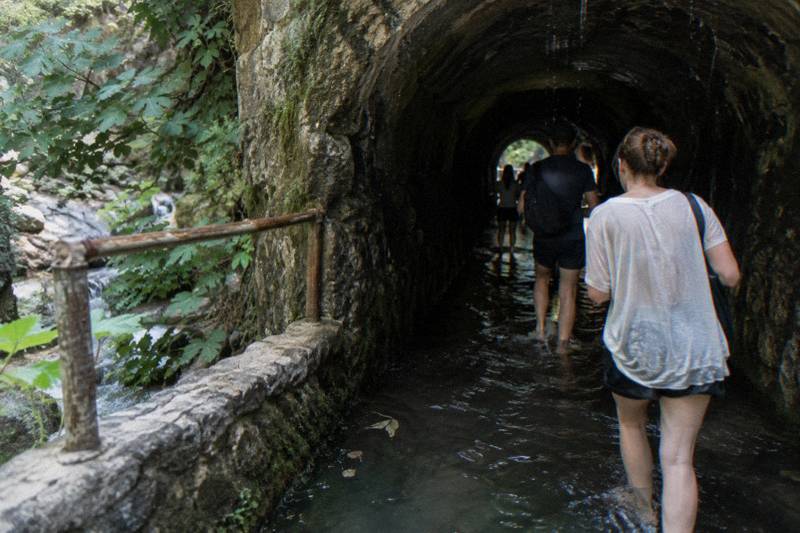
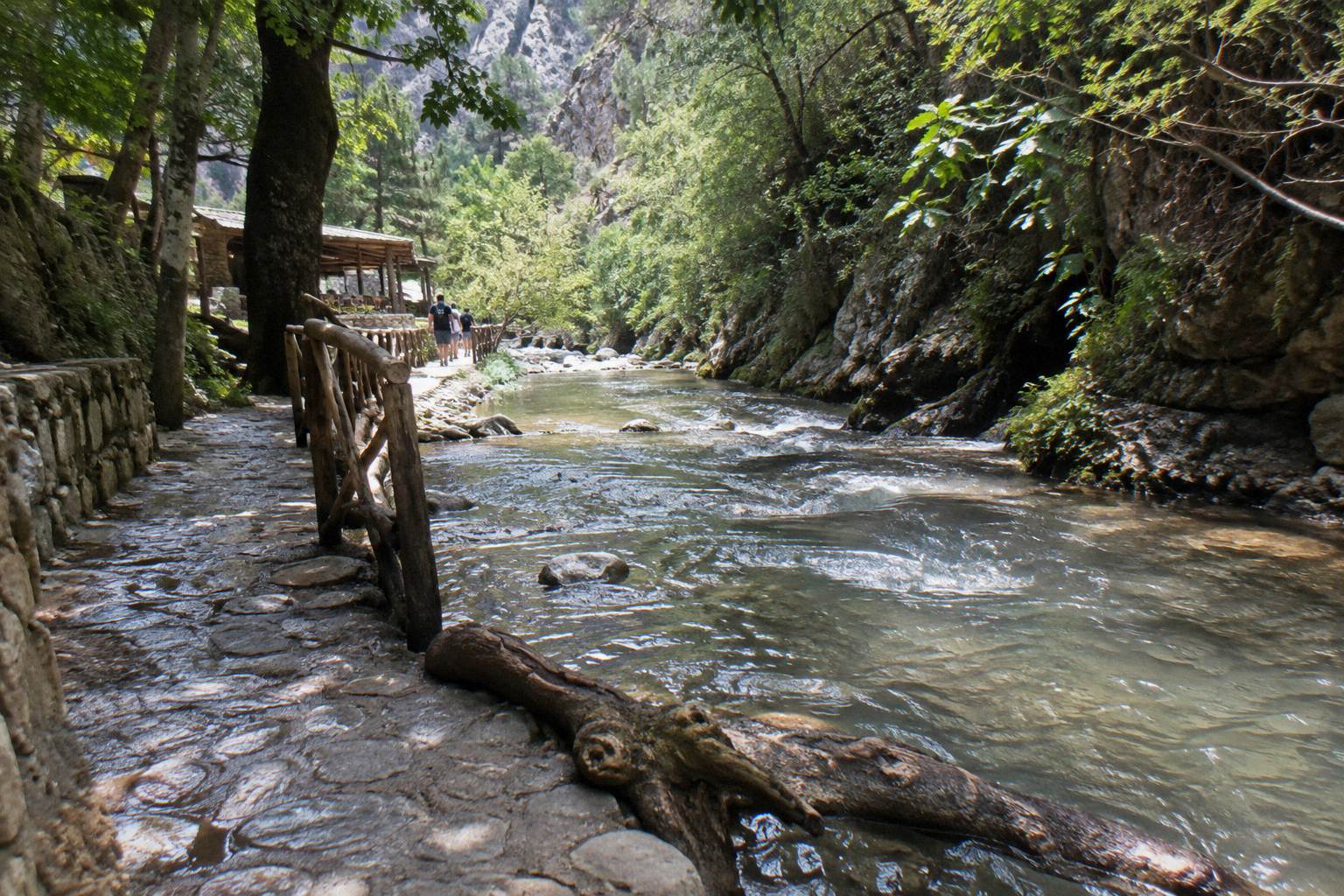
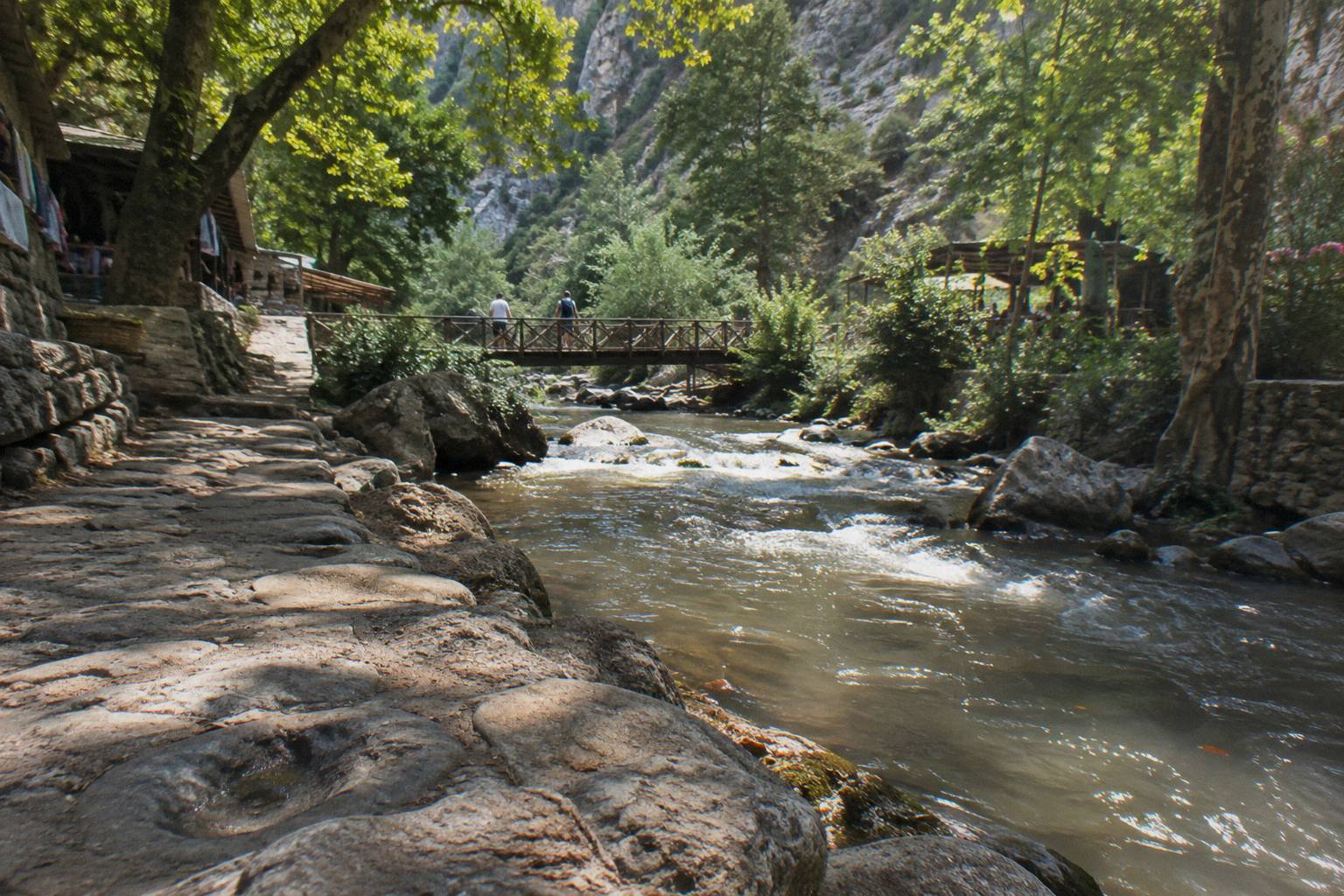
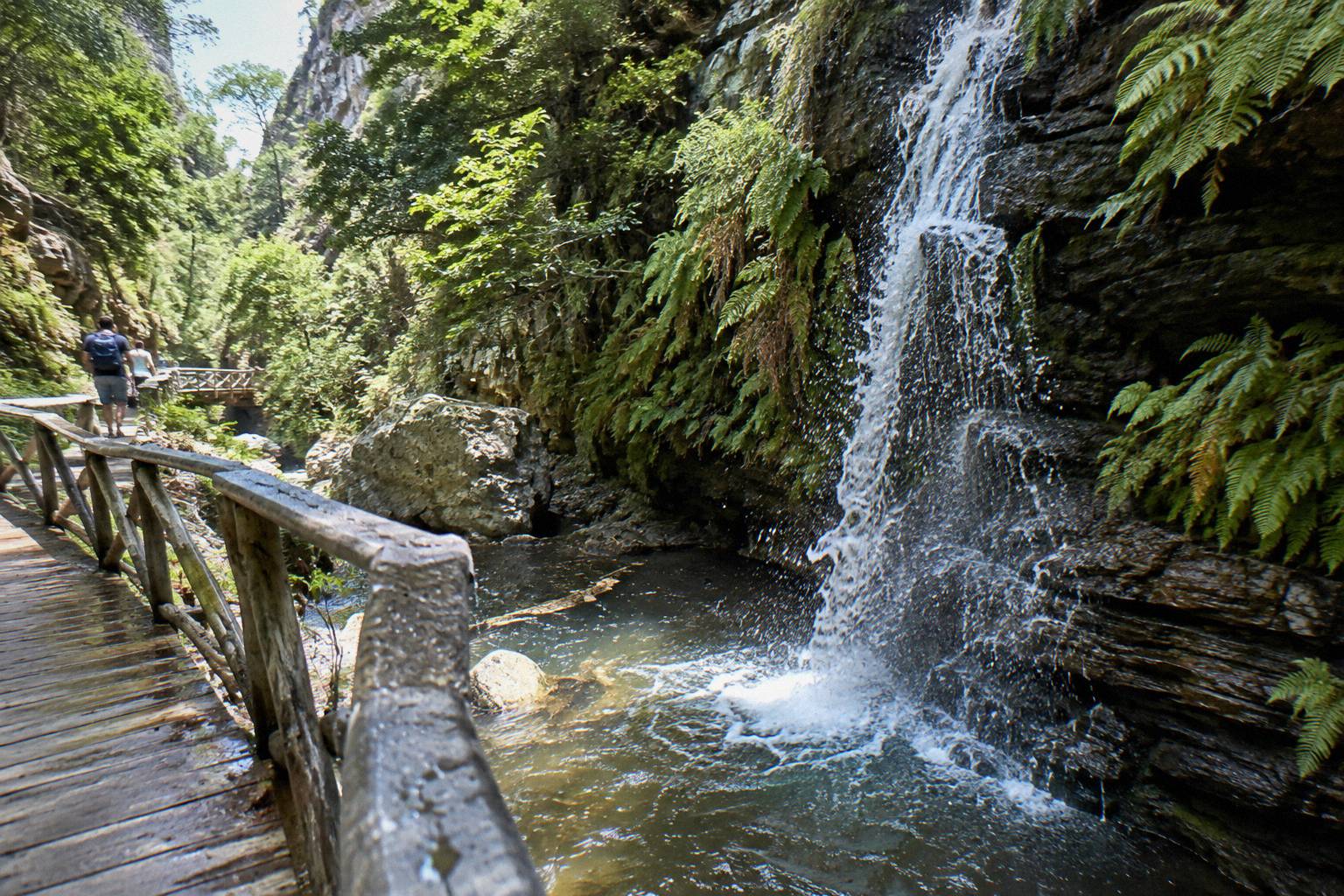
The main trail follows the Pelekanos river for 1.3 km to the Kalopetra monastery, over cobblestone paths, wooden bridges and steep natural ground past springs, ponds and a small waterfall. It is shaded and short, but the official site states plainly that the valley is not accessible for people with disabilities.
This is the section that decides the verdict for a meaningful minority of visitors. The trail is genuinely beautiful: running water the whole way, deep shade from the Sweetgum canopy, bridges crossing and recrossing the stream, and a steady climb toward the monastery at about 370 m on the slopes of Mount Lefkopoda. The monastery's own page on the valley site gives the 1.3 km distance and the founding story: built in 1782 by Alexandros Ypsilantis after a vow made in a storm, with a name meaning "good stone".
But "1.3 km" undersells the ground. The paths are steep, natural and cobbled, and the site's home page says directly that the valley is not accessible for people with disabilities. There is no smooth alternative route, and the return walk from the monastery is downhill on the same stones. Fit walkers in ordinary trainers manage it easily in well under an hour each way with stops; anyone with limited mobility, a pushchair, or weak ankles will find at least the upper stretch a real obstacle, and the lower streamside section uneven.
Visitors with reduced mobility who still want the experience have two honest options. One is to treat the lower valley, near the entrance and the first bridges, as the whole visit and skip the monastery climb. The other is to choose a tour where the valley is one gentle stop in a longer day rather than the entire reason for booking, so the walking load is shared with seated sightseeing. The practical questions around this are covered in our post on whether Butterfly Valley suits kids and pushchairs.
For everyone else, the walk is the attraction. It is the rare Greek sightseeing day where the heat of midsummer barely reaches you, and the 08:00 opening means an early start can put you on the trail before the coach groups arrive.
When Is Butterfly Valley Less Worth It?
It is less worth it from November to April, when the valley is closed or the moths are absent, and for visitors with limited mobility, given the steep, inaccessible paths. It is also a weaker buy for anyone who wants a full day out: two to three hours covers the site, so pairing it with another stop is almost always the better plan.
The first case is calendar-based and unavoidable. The season runs 12 April to 1 November, and the moths run May to September. A trip in late October can still be worthwhile at the EUR 3 rate, with the stream and the trees doing the work, but it is a landscape visit, not a wildlife one. If your holiday falls outside the season entirely, the valley is closed and the question answers itself; our post on whether Butterfly Valley is worth it outside the season deals with that scenario in full.
The second case is mobility-based and deserves blunter language than most travel pages use. If steep cobbles and a sustained climb are not realistic for you, the EUR 3 to 6 ticket will buy you the first few hundred metres of streamside path and no monastery. Some visitors find that a fair trade for the shade and the sound of water; others feel short-changed. Know which you are before you commit, and if in doubt, choose one of the combined coach tours so the day does not hinge on the walk.
The third case is about the shape of the day. The valley is a superb two hours and a thin eight. Reviews that call it overrated tend to describe arriving by dedicated excursion, walking up and back, and standing around waiting for the bus. The fix is structural: combine it. The classic pairings on this roster are Seven Springs (the Manos Going 7 hour trip from €29, rated 4.6 across 214 reviews, or the Rhodes-Tours Small-Group Seven Springs Trip from €25), Filerimos Hill, or the boat-and-valley combos that continue to Chalki for a full 8 hour day from €54 with Cretanholidays.
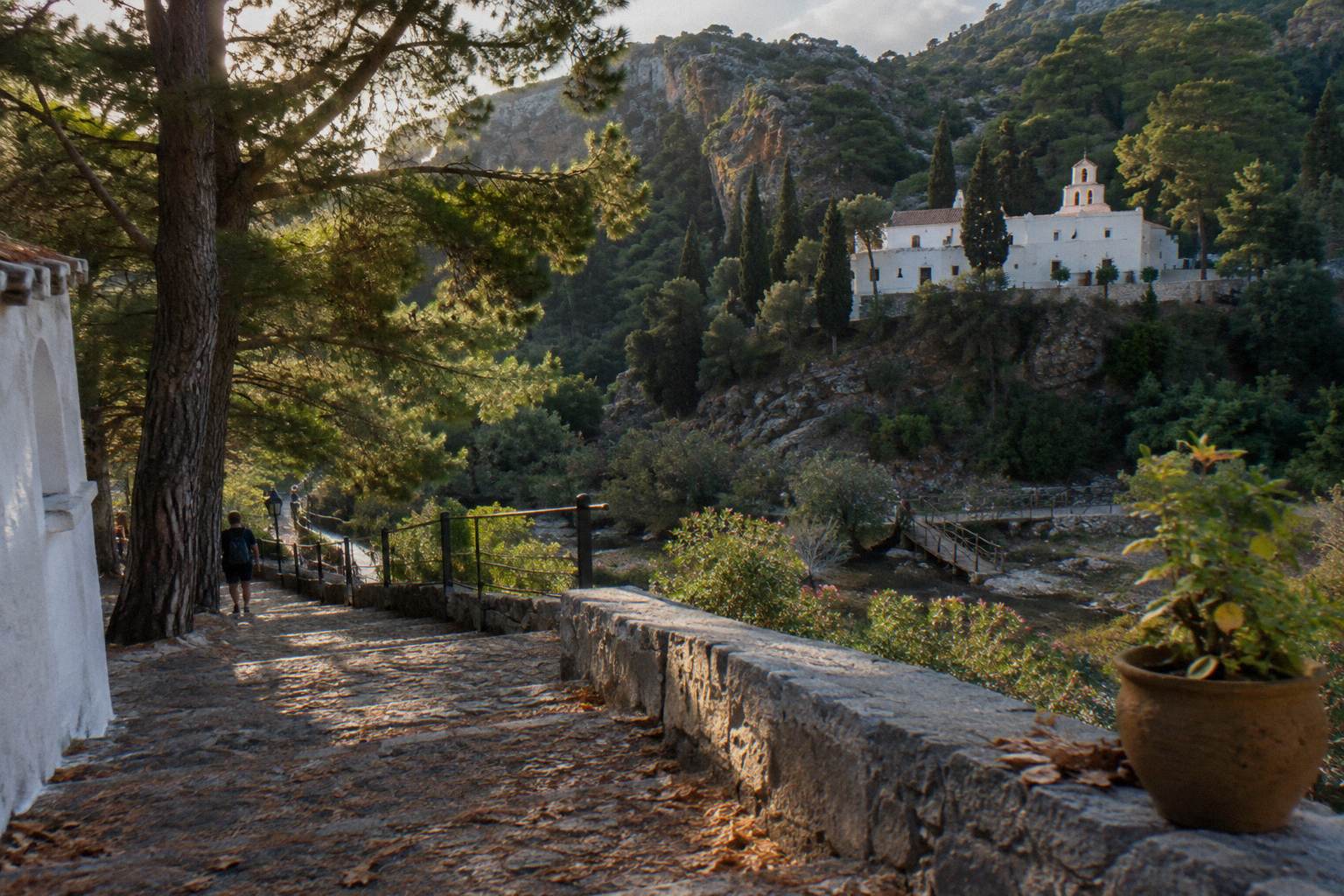
There is also a timing question within the day. The valley opens at 08:00, and the moths rest through daylight hours regardless of crowds, but the narrow trail absorbs far fewer people comfortably than the ticket price suggests. Early morning is the quiet window; late morning belongs to the coach convoys. If your tour's itinerary puts the valley at the end of the day, or your independent plan puts you there at noon in August, you get the same moths with a fraction of the atmosphere that makes the place special. None of that makes the visit not worth it, but it makes the early alarm worth setting.
Coach Trip Or Go Alone: Which Is Worth The Money?
Going alone is cheapest if you have a car: the ticket is EUR 3 to 6 and the drive from Rhodes Town is about 26 km. Without a car, the shared bus options start at from €15, so the guided premium over the ticket is small, and the bigger decision is which extra stops, if any, you want bolted onto the valley visit.
Run the arithmetic plainly. Independent visitors pay the ticket and whatever the drive costs in fuel or taxi fare; the site does not publish a verified public bus line, so we do not print one. Visitors without a car face the choice between a taxi they negotiate themselves and a seat on a coach that handles the round trip, and on this roster the seat can cost as little as €15.
The budget end of the market is real but bare. The Budget Bus, Half Day from SEBECO LINES costs from €15 per person with pickup from Rhodes hotels, the valley entrance paid separately on the day, and no reviews read at the time of this roster, so there is no guest verdict to lean on. It states free cancellation up to 24 hours before departure. For a traveller whose whole goal is a cheap round trip and who does not care about guiding, it is the arithmetic winner across all 30 tours listed on Butterfly Valley Rhodes.
One rung up, the Filerimos Hill Coach Trip, 5 Hours from Kariba Travel costs from €21 per person, includes hotel pickup and adds Filerimos Hill plus a butterfly museum to the valley stop, and carries a rating of 4.1 across 41 reviews with free cancellation up to 24 hours ahead. That is the version to pick if you want the extra stop and the reassurance of a review pool, at a price that is still less than a taverna lunch. The valley entrance is again an extra paid on the day, at EUR 3 to 6 by season.
For the full-day shopper, the value question shifts from price to itinerary. The West Coast Villages Day Trip from TUI HELLAS, from €60 per person for 8 hours, threads Ancient Kamiros, Embonas and Siana around the valley and suits a visitor who wants the island's west coast in one day; it carries 4 reviews, too few for a reliable verdict either way. And if walking is your thing rather than riding, the Small-Group Hike, 4 Hours from Hiking rhodes at from €55 per person includes the valley entrance and free cancellation up to 24 hours ahead, with 1 review so far. Check availability on whichever shape of day fits, because summer departure dates on the smaller-group options fill before the big coaches do.
The honest summary: nobody is being overcharged here. Every price point on the roster buys roughly what it advertises, the differences are in inclusions and group size rather than value traps, and the only genuine mistake available is booking a long combined day when you wanted two quiet hours, or the reverse.
The Honest Verdict
Butterfly Valley is worth visiting for most people between May and September, when the Jersey tiger moths are present, the ticket is EUR 3 to 6, and the 1.3 km shaded river trail delivers exactly what the photographs promise. It is a conditional yes outside those months, and a qualified no for anyone the steep, inaccessible paths would exclude.
Everything above rolls up into a decision you can make in a few seconds. Travelling in June, July, August or September, with reasonable mobility, and willing to go early? Go, independently or on any tour that fits your budget, and keep quiet on the trail. Travelling in April or October? Go for the setting at the EUR 3 rate, and book with the understanding that the moths may be few or absent. Travelling from November to April, or with mobility needs that steep cobbles rule out? Spend the day elsewhere on Rhodes; the valley will still be there, in season, on a future trip.
On the booking side, the choices are honest at every tier: from €15 for a bare-bones half-day bus, from €29 for the most reviewed coach trip (4.6 across 214 reviews, 7 hours including Seven Springs), from €55 for a small-group hike with the entrance included, and private charters from €265 per group upward for people who want the day shaped around themselves. Whichever you pick, confirm the valley entrance position on the listing before you compare prices, since most listings treat it as an extra paid on the day.
If you want the second and third opinions before committing, the planning guide to combining the valley with Seven Springs in one day covers the most popular pairing, and the deeper walk details live in the guide to the valley trail, its steps and the monastery climb.
Common Questions About Butterfly Valley In Rhodes
Is Butterfly Valley In Rhodes Worth Visiting?
Yes, for most visitors between May and September: the moths are present, the ticket is EUR 3 to 6 by season with children under 12 free, and the 1.3 km shaded trail along the Pelekanos river is a genuine highlight. It is less worth it outside the moth season and not suitable for visitors who cannot manage steep natural paths.
Is Butterfly Valley, Rhodes Worth It?
It is, provided your expectations match the facts: the insects are Jersey tiger moths, not butterflies, present from May to September; the valley is open 12 April to 1 November from 08:00 to 18:00; and the walk is short but steep. Visitors in the moth season who go early almost universally get their money's back several times over at the EUR 3 to 6 ticket price.
How Long Do You Need At Butterfly Valley Rhodes?
Two to three hours covers the streamside trail and the 1.3 km walk to the Kalopetra monastery at an easy pace. Allow half a day once travel is included; the valley sits about 26 km from Rhodes Town and 10 km from the airport.
Do You Need To Book A Butterfly Valley Tour In Advance?
The valley itself sells tickets at the gate for EUR 3 to 6 by season, so independent visitors do not need to book. Tours, especially small-group ones in summer, are worth reserving ahead; most listings on this site offer free cancellation up to 24 hours before departure, so early booking carries little risk.
When Is Butterfly Valley Not Worth It?
From November to April the valley is closed or the moths are absent, and for anyone with limited mobility the steep, cobbled paths are a real barrier, since the site states it is not accessible for people with disabilities. It is also a thin day out on its own; pair it with Seven Springs, Filerimos Hill or Chalki for a fuller trip.