Are There Toilets At Butterfly Valley, Rhodes?
The official Butterfly Valley pages do not publish a facilities list, so here is what is confirmed, what visitors should plan for on the 1.3 km trail, and how the bundled coach and small-group day trips handle a facilities stop.
The valley operator DERMAE publishes opening hours, seasonal ticket prices and a description of the site on its official site, and not one of those pages lists toilets, a cafe or a shop. That silence is the honest starting point for anyone asking about facilities at Butterfly Valley (Petaloudes), the Jersey tiger moth valley at Ano Kalamonas, about 26 km from Rhodes Town and 10 km from the airport. This article walks through what is actually confirmed, what the visit physically involves, and how the supported day trips on Butterfly Valley Rhodes change the planning picture for families and older visitors.
The question deserves more care than it usually gets. Plenty of travel content answers it confidently, naming facilities that no official page confirms. A family planning around a small child, or an older couple weighing whether the outing is manageable at all, deserves an answer built only from what the operator actually wrote down, plus clearly labelled planning advice. That is the whole method of this page.
The honest answer is that the official operator pages do not publish a facilities list, so no confirmed statement about toilets at Butterfly Valley can be made either way. The valley sits at Ano Kalamonas, opens 08:00 to 18:00 daily in season from 12 April to 1 November, and involves a 1.3 km natural trail, so the safe planning assumption is to treat facilities at the site as unconfirmed and prepare before you travel.
That is not a dodge. It is the difference between a page that tells you what a search snippet guessed and a page that tells you what the site operator actually wrote down. The official pages cover administration, ticket pricing, the moth species and the Kalopetra monastery trail in real detail, and the absence of any facilities section is consistent across all of them. Anyone who tells you a specific building exists in a specific spot on the valley grounds is repeating an unpublished claim.
What this means in practice is a small amount of pre-planning. The valley is not a remote wilderness; it is a managed attraction with an entry desk, seasonal pricing of EUR 3 to 6 for adults by season, and free entry for children under 12. It has a published phone number, an email address, a board of directors and a natural history museum mentioned on its own pages. But "managed attraction" is not a facilities guarantee, and this site will not manufacture one. Treat the visit the way you would treat a half day at a natural site anywhere in the Greek islands: use facilities before you leave your hotel or your coach's last settled stop, carry water, and plan for the trail itself.
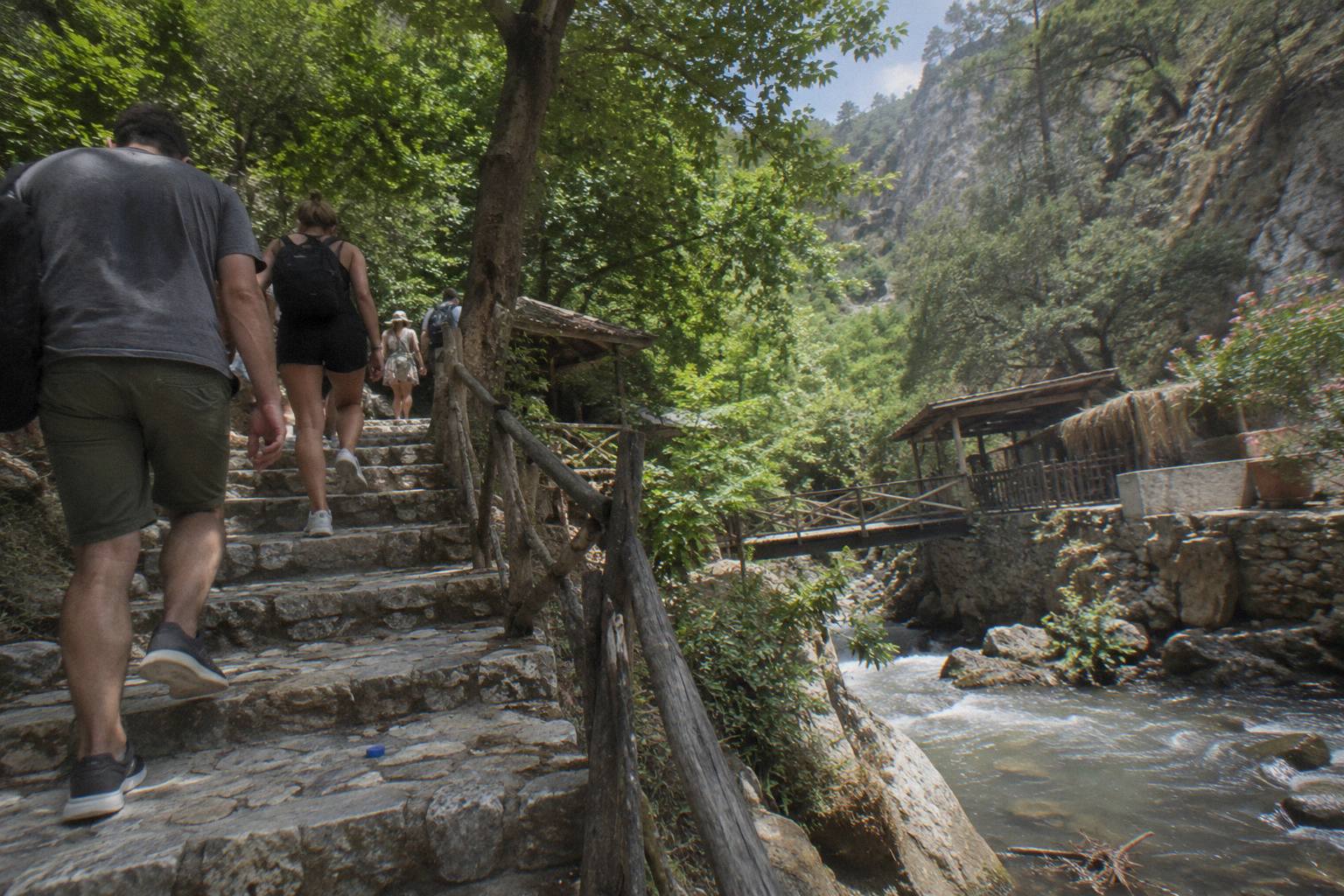
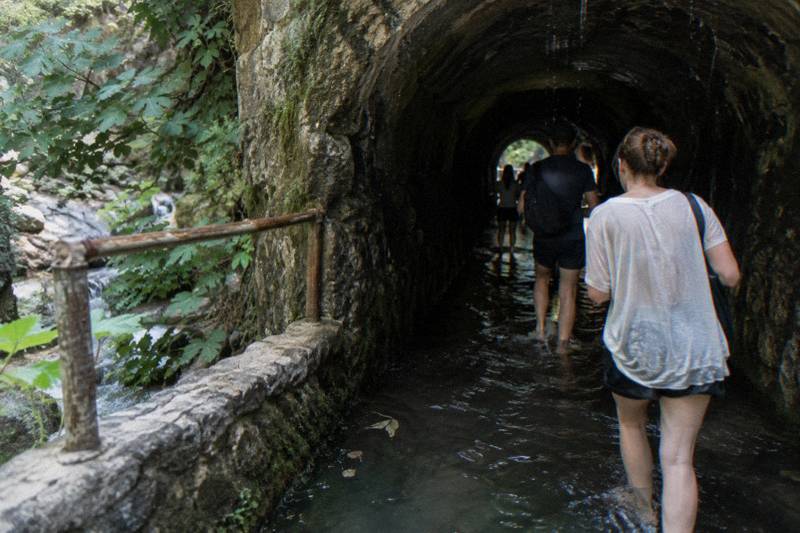
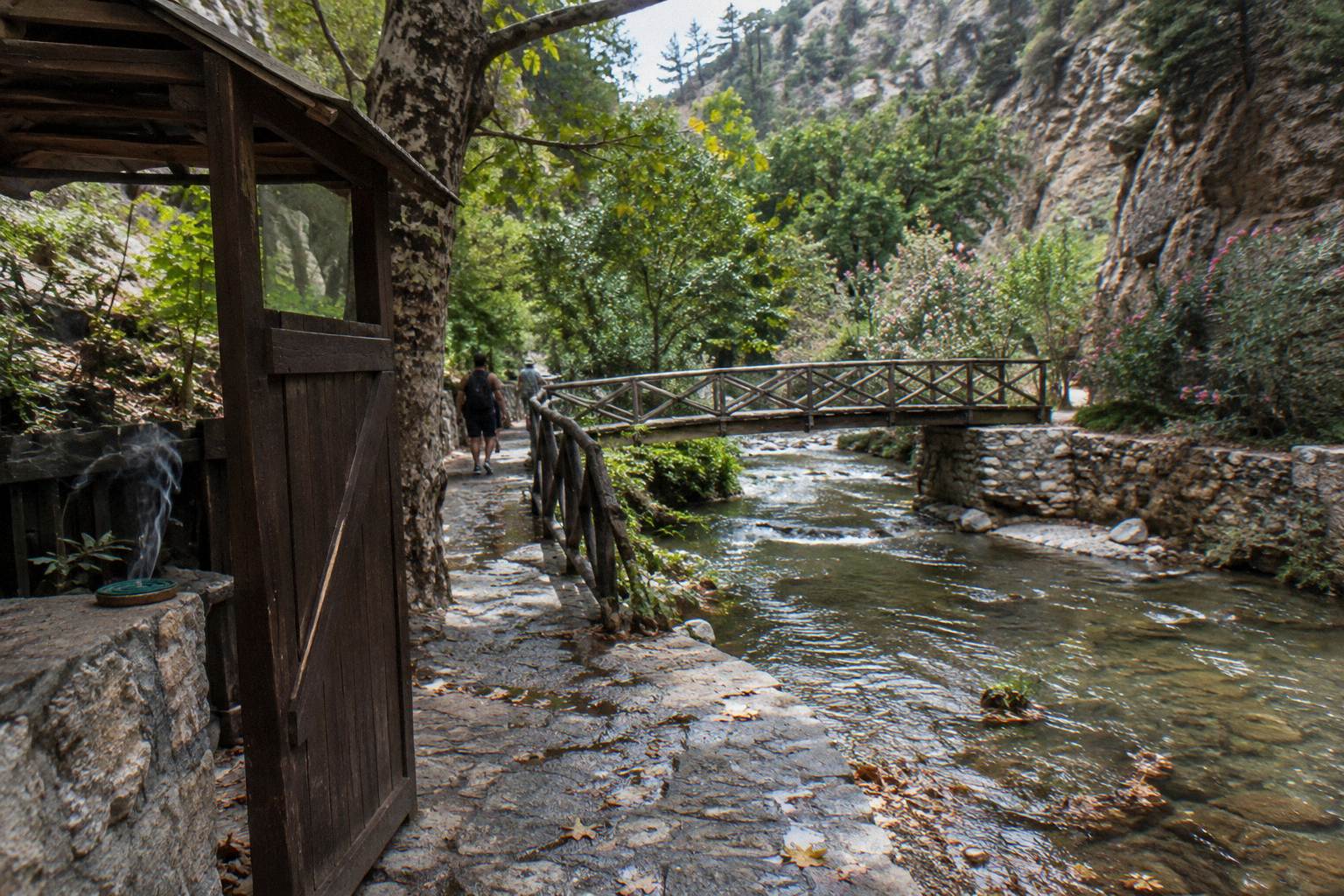
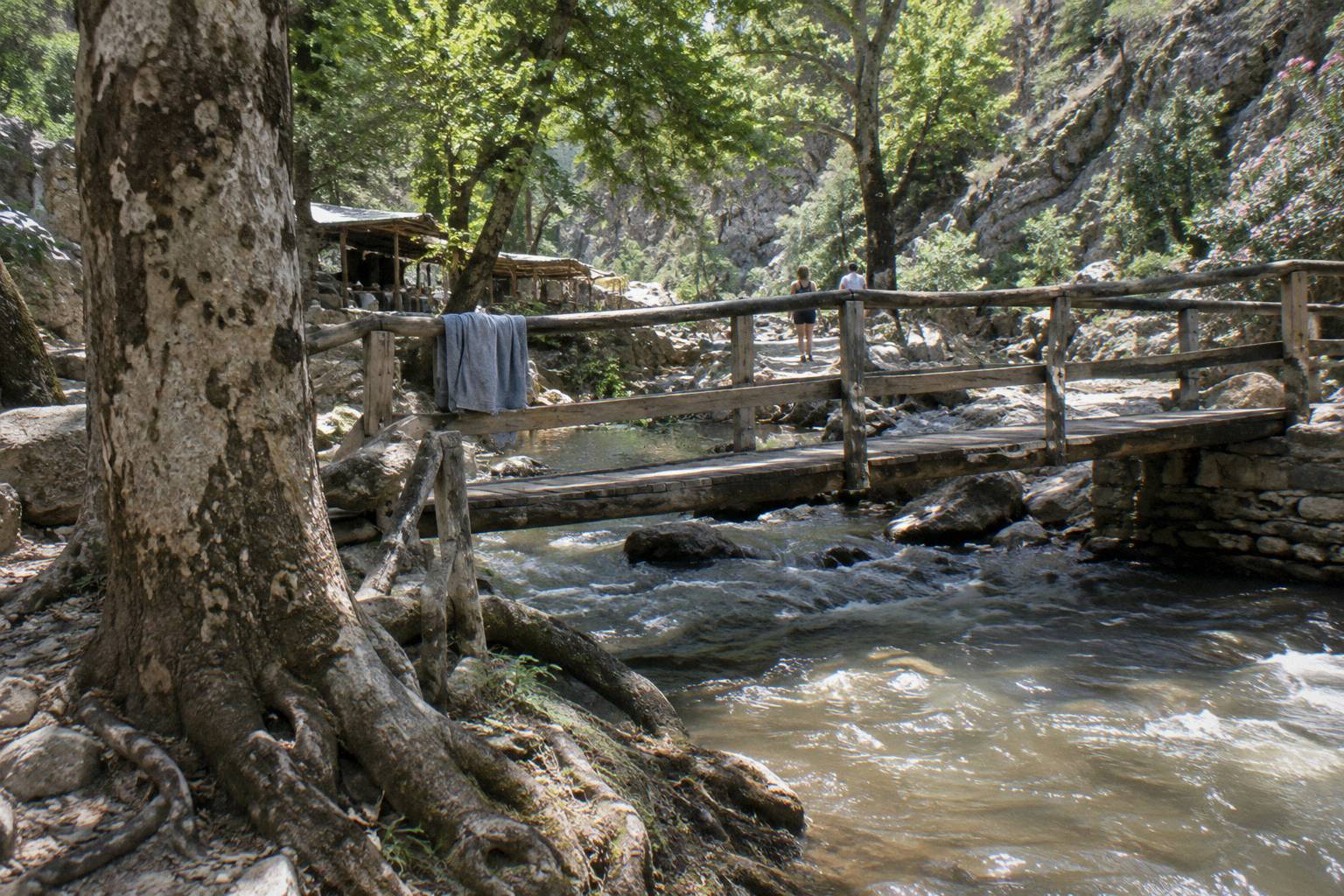
The trail detail matters more than it sounds. The official description of the route to the Kalopetra monastery, detailed on the valley's own monastery page, runs 1.3 km along the Pelekanos river, past springs, ponds and waterfalls, over wooden bridges and cobblestone paths in shade. It is a walk with a destination, not a loop past a visitor centre. If you are travelling with children, the honest planning frame is simple: the trail is a there-and-back walk on natural paths, so structure the day so that a toilet stop happens at a known place before the walk starts.
There is a second reason the trail matters for this question. A walk of that shape takes time, and once you are on the cobblestones beside the river, you are committed to the path you are on. You cannot pop back to the car in five minutes from the midpoint. So the facilities question is really a timing question: where is your last certain stop, and how long is the gap between that stop and your return? Answer that for your own group and you have answered the question this page exists for.
If you are weighing self-drive against a supported trip, this is exactly the decision our comparison of valley tours from Rhodes was written for: the tours differ in what they bundle and how long they hold you on the road, and families usually care about those numbers more than about anything else on the listing.
What Does The Visit Actually Involve, Trail-Wise?
The visit is a 1.3 km each-way natural trail to the Kalopetra monastery along the Pelekanos river, on cobblestone paths and wooden bridges, steep in places and officially described as not accessible for people with disabilities. The valley opens 08:00 to 18:00 daily in season, and the moths are present from May to September. Plan the walk, not just the drive.
The accessibility note is on the valley's own home page, and it is unusually frank for a Greek attraction: steep natural paths, no disabled access. That single line reshapes the day for anyone with mobility limits, a pushchair, or a family member who walks slowly. The full picture of the route, including the monastery at about 370 m on the slope of Mount Lefkopoda, is in our guide to the walking trail, steps and the monastery, which breaks the climb into stages.
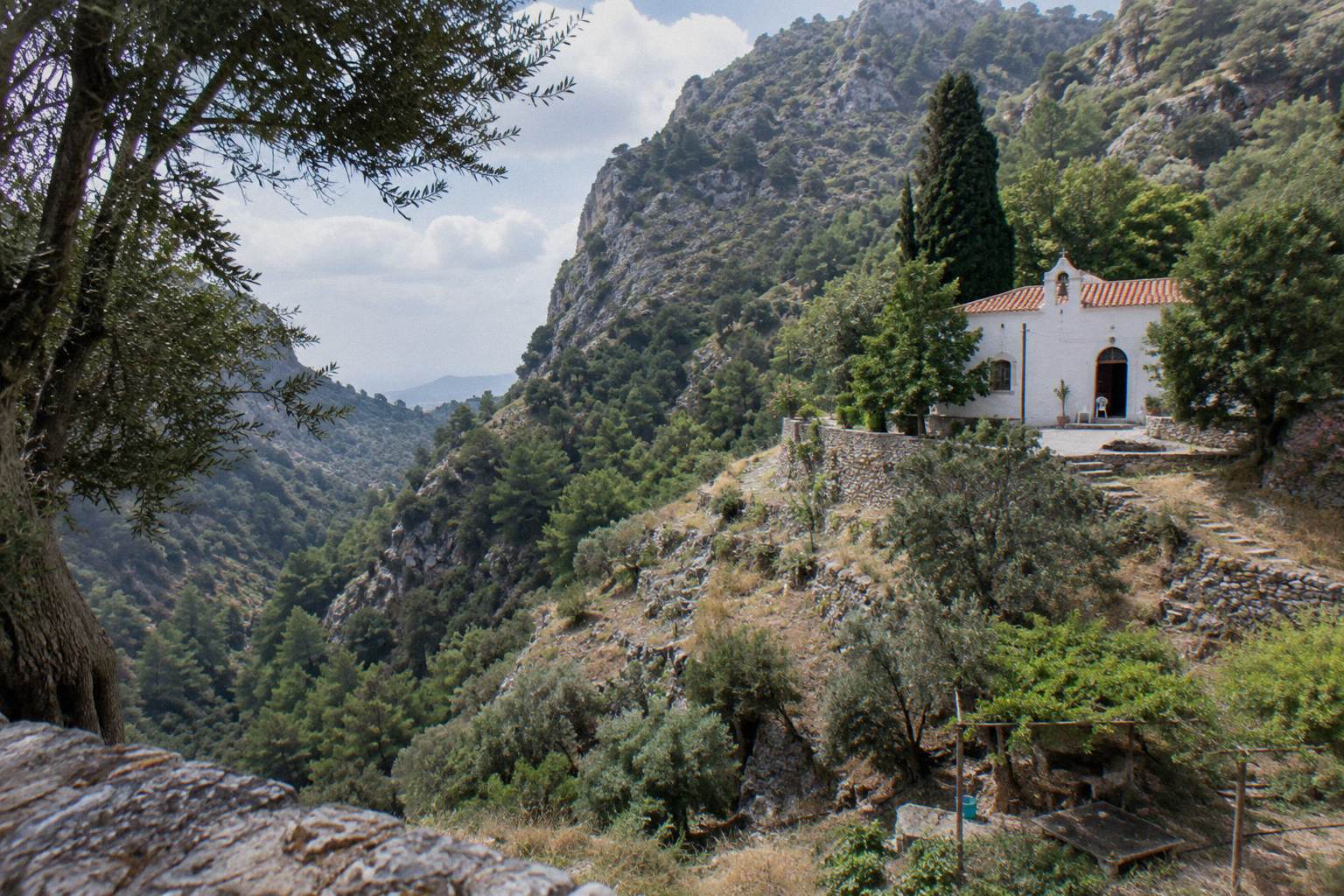
The monastery gives the walk its shape. According to the valley's own history page it was founded in 1782 by Alexandros Ypsilantis after a vow made in a storm, and its name, Kalopetra, means "good stone". The same page mentions a Museum of Natural History that hikers can visit alongside the monastery. So the top of the trail is a genuine destination with something to see, which matters for families: a walk that ends at a viewpoint and a small museum is a much easier sell to children than a walk that ends at nothing.
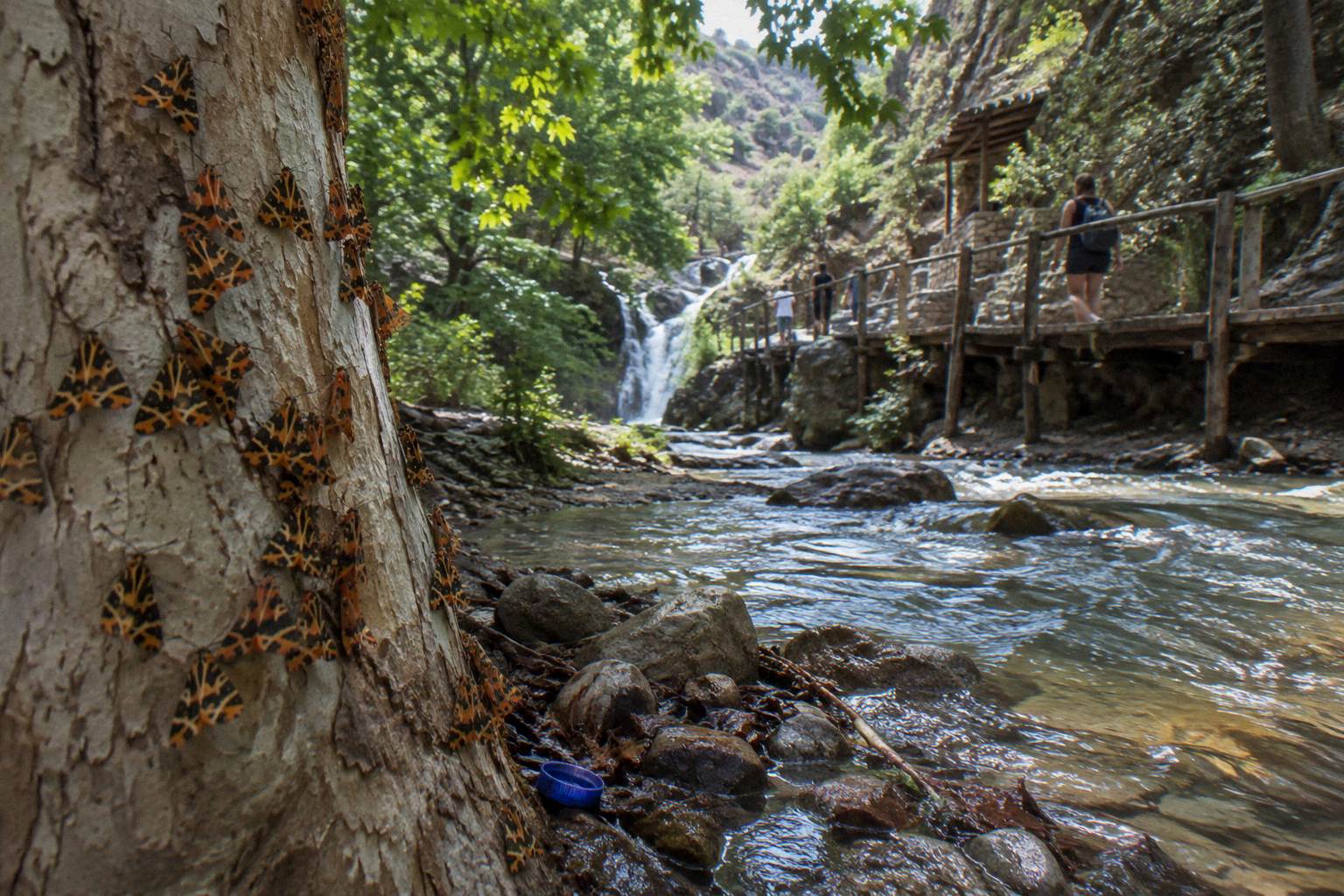
The quiet rule is worth repeating because it changes the texture of the visit. The valley's administration page says visitors keep quiet so the moths, which rest on trunks, leaves and rocks by the water through the day, are not disturbed. A site where the explicit ask is silence is a site built around a fragile habitat first and visitor comfort second. That context explains, without excusing, why a facilities list is not front and centre on the official pages: the operator's published priority is the biotope, one of the only places in Europe with Oriental Sweetgum trees, which the moths are probably drawn to for their resin and the humidity they hold.
For families, the practical consequence is a packing decision rather than a booking decision. Bring water, plan your last certain toilet stop at your hotel or at a stop the tour itinerary names, and keep the walk to the time you actually have. The question of how long you need at the valley deserves its own answer, but the short version is that the trail, not the queues, sets the clock. Our article on what to wear for the walk covers shoes and heat, which matter more than most packing lists admit on steep cobbles.
Do The Day Trips Solve The Facilities Question?
A supported tour does not add toilets to the valley, but it changes where your last known stop is. The Coach Trip, Seven Springs Included by Manos Going, from €29 per person with 214 reviews at 4.6, runs 7 hours and pairs the valley with Seven Springs; pickup is listed for Faliraki, Rhodes City, Ixia and Ialysos. That itinerary gives you settled stops before and after the trail.
This is the real argument for a bundled day when facilities are a worry. A coach trip has a structure: hotel-area pickup, a first stop, the valley, a second stop, the drive home. Seven Springs, which the Manos Going itinerary includes, is a developed visitor spot with its own day-trip infrastructure, and the same pairing appears across the roster, which we cover in the Butterfly Valley and Seven Springs day trip guide. The valley entrance on this tour is an extra paid at the valley (EUR 3 to 6, by season), and the listing offers free cancellation with a 24 hour window. You can check availability beside our full write-up of the pairing.
The review pool is part of the argument. At 4.6 across 214 reviews, this is the most reviewed tour on the entire roster of 30 products, which means the day has been documented by enough visitors that its rhythm is not a guess. A guest review on the live listing even mentions paying the valley entry, about EUR 3, on the day, which matches the official low-season ticket band. None of that tells you where a toilet is, but it tells you the itinerary runs the way it is sold, and a predictable itinerary is what a facilities-conscious traveller is actually buying.
The budget end of the roster works differently. The Half-Day Bus, Filerimos Stop by Kariba Travel, from €25 per person, runs half a day from northern Rhodes hotels with a Filerimos Hill stop, another developed site with a monastery and a butterfly museum on the sibling itinerary. Its 5-hour sibling, the Filerimos Hill Coach Trip by the same operator, is rated 4.1 across 41 reviews from €21 per person, and is the subject of our guide to Filerimos Hill tours that include the valley. Either way, the pattern is the same: the itinerary gives you named, settled stops, and those stops, not the valley itself, are where a family should plan its breaks.
The counter-case is the hiking format. The Small-Group Hike, 4 Hours by Hiking rhodes, from €55 per person, is a 4-hour guided walk where the listing says the valley entrance is included; it has one review read, which is too few for a star claim. A hike-first itinerary is the wrong shape for a visitor whose main concern is facilities, and that is fine: it exists for people who want the trail, not the plumbing. Longer loop tours point the same way. The West Coast Villages Day Trip by TUI HELLAS runs 8 hours from €60 per person through Ancient Kamiros, Embonas and Siana, with the valley entrance as an extra; 4 reviews are read, too few for a star claim. Village stops on a route like that are settled places by definition, which is exactly their value to a family, but an 8-hour day is a long commitment. Our guide to Rhodes island tours that stop at the valley maps those longer loops properly.
Private formats solve the problem a different way. The roster carries a Private Nature Loop, Per Vehicle by Rhodes Greece Tours from €347 per vehicle, pairing Filerimos Hill (EUR 6 per person extra) with Seven Springs over 5 hours, which puts a private vehicle and its driver at your disposal for the day; one review is read, too few for a star claim. With a private driver, stops happen when you ask for them, which is the most direct answer to the facilities question that money can buy. Private formats are priced per person, group or vehicle and are never comparable across those bases, so treat them as a different product, covered properly in our private valley tours guide.
What Should Families And Older Visitors Actually Do?
Treat facilities at the valley as unconfirmed, plan a certain stop before arrival, carry water, and match the tour format to the walker: a coach pairing for structure, a short Filerimos half day for a lighter itinerary, or a private vehicle if you want control over stops. Book with free cancellation where the listing offers it, and check the ticket by season before you go.
Here is how that advice breaks down by traveller, as planning guidance rather than operator promises:
| Traveller | Sensible format | Why it fits the facilities question |
|---|---|---|
| Family with young children | Coach Trip, Seven Springs Included (from €29 pp) | 7-hour structure with two named stops; pickup listed in four resort areas |
| Older visitors | Filerimos Hill Coach Trip, 5 Hours (from €21 pp) | Shorter day, developed stops, 4.1 across 41 reviews |
| Mobility-limited visitors | Any format, but skip the 1.3 km trail | The valley's own site states no disabled access on steep natural paths |
| Independent travellers | Self-drive plus a settled stop in Theologos | The monastery page places the valley about 8 km south of Theologos |
| Hikers | Small-Group Hike, 4 Hours (from €55 pp) | Entrance included; one review read, so judge the listing itself |
Two honest caveats on that table. First, the self-drive row is general planning advice, not a claim about any specific business in Theologos; the point is simply that a village stop before a natural site is the normal pattern on any island drive. Our guide on getting to the valley from Rhodes Town covers the driving and bus questions properly, and the blog post on whether there is a bus from Rhodes handles the public transport angle without printing an unverified line number.
Second, the ticket. The official visitor information page and the home page disagree slightly on the exact season boundaries, so the safe printed figure is EUR 3 to 6 for adults by season, free for children under 12, with the higher band covering the core summer. The full breakdown, with the caveats spelled out, is in our opening hours and ticket price guide. Note also that 14 of the 30 tours on this site list the valley entrance as an extra paid on the day, while only 3 say it is included, so check your listing before assuming anything is bundled. School and group discounts exist but must be arranged with the valley directly by phone.
A third point, aimed at parents: the free-under-12 ticket policy means the cheapest part of a family visit is the entry. The expensive part, in energy terms, is the walk. Budget the day around the slowest walker in your group, not the fastest, and take the earliest coach pickup you can realistically make; the hours run 08:00 to 18:00, and a morning arrival beats the midday heat on the cobbles.
One more seasonal point that belongs with any planning discussion: the moths are present from May to September, and the season itself opens 12 April and closes 1 November. Visiting in late October is perfectly possible on paper, but the reason most people come, the resting clouds of red and yellow wings, thins out after September. The species is a nocturnal moth, so what visitors see by day is the resting population on trunks and rocks by the water. The question of whether the valley is worth it outside the season is answered elsewhere on this site; for this article the relevant point is that facilities planning matters most in July and August, when the trail is hottest and the walk feels longest.
Does Booking In Advance Change Anything?
Booking ahead does not change what exists at the valley, but it locks in a structured itinerary with a free-cancellation window where the listing offers one, which is the main lever a facilities-conscious traveller actually has. Most coach rows on this site list free cancellation with a 24 hour window, so a plan can flex until the day before.
The deeper answer to whether you need to pre-book at all is in our article on booking a valley tour in advance. The facilities angle is narrower: if toilets are a genuine worry for your group, the value of booking is not the ticket itself, it is the itinerary. A booked coach seat means a named pickup window, a known sequence of stops and a driver who does the run daily, and every roster row above shows that structure in its stops field. Self-drive gives you freedom but also gives you the whole facilities question to solve alone.
The cancellation window deserves its own sentence because it is the quiet hero of family planning. A 24 hour free-cancellation window means you can hold a plan and still drop it if someone in the group has a bad morning, which is exactly the kind of flexibility that matters when the group includes small children or older relatives. Check the live listing before paying, because the one winery-stop private row is sales final and should not be assumed flexible.
For families weighing a pushchair question alongside the toilet question, the honest answer on strollers is already grim from the accessibility line alone; see whether the valley suits kids and pushchairs for the full reasoning. And if you are still at the stage of wondering whether the whole outing earns its place on a Rhodes itinerary, start with whether Butterfly Valley is worth visiting. The moth-versus-butterfly distinction, which surprises almost everyone, is covered in our explanation of the Petaloudes moths.
The Coach Trip, Seven Springs Included remains the pairing this site points most families toward, because it is the most reviewed tour on the roster at 4.6 across 214 reviews, and the review pool itself is a form of evidence that the day runs as described. Whether you choose it or a lighter half day, the planning rule from the top of this article still holds: treat facilities at the valley as unconfirmed, and let the itinerary, not hope, provide your stops.
Common Questions About Toilets At Butterfly Valley, Rhodes?
Are There Toilets At Butterfly Valley, Rhodes?
The official operator pages do not publish a facilities list, so no confirmed statement can be made either way. Plan a certain toilet stop before arrival and treat facilities at the site itself as unconfirmed.
What Are The Opening Hours Of Butterfly Valley?
08:00 to 18:00 daily, from the season opening on 12 April until the close on 1 November, according to the operator's official site.
How Much Is The Entry Ticket?
EUR 3 to 6 for adults depending on the season window, with children under 12 free. The official pages disagree slightly on exact dates, so expect the higher band through the core summer.
How Long Is The Walk Inside The Valley?
The trail to the Kalopetra monastery is 1.3 km each way along the Pelekanos river, on steep cobblestone paths and wooden bridges. The valley's own site states it is not accessible for people with disabilities.
Is The Valley Entrance Included In Tours?
Usually not. Fourteen of the tours on this site list the entrance as an extra paid at the valley (EUR 3 to 6, by season) and only three say it is included. Check your listing before booking.
Are The Insects Actually Butterflies?
No. They are Jersey tiger moths (Panaxia quadripunctaria), a nocturnal moth present in the valley from May to September. The valley asks visitors to keep quiet so the resting moths are not disturbed.