What Should You Wear To Butterfly Valley In Rhodes?
Planning what to wear to Butterfly Valley in Rhodes: shoes for cobbled paths, light clothing for shaded trails, and what to pack for the walk to Kalopetra monastery.
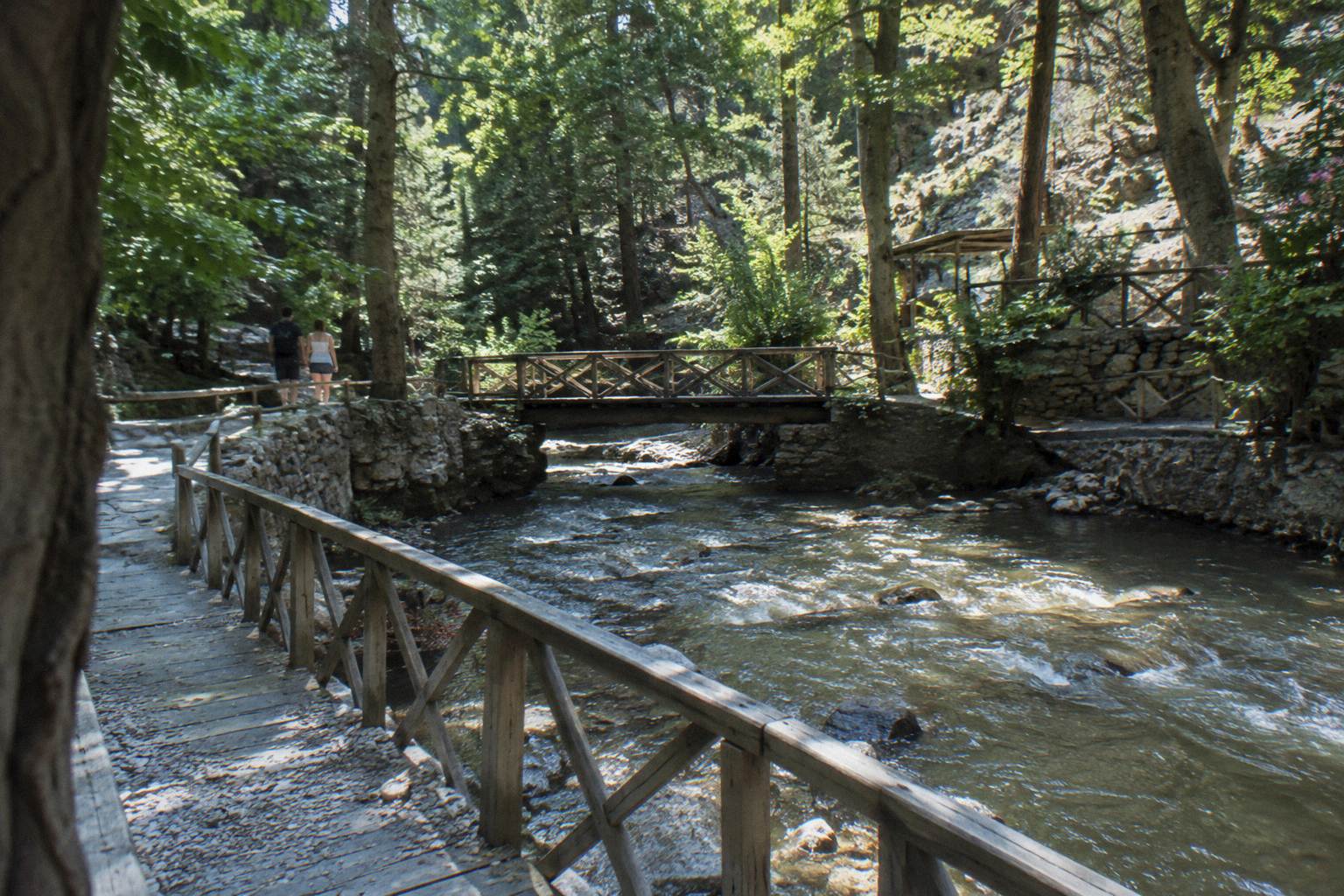
The trail inside Butterfly Valley (Petaloudes) climbs over cobblestones and wooden bridges for 1.3 km along the Pelekanos river, and the valley's own operator describes the paths as steep natural ground that is not accessible for people with disabilities. That single fact does more to decide your outfit than any packing list: whatever you wear, your shoes will be doing real work. The valley sits at Ano Kalamonas in the north of Rhodes, about 26 km from Rhodes Town, and its hours run 08:00 to 18:00 daily in season, so most visits happen during the warmest part of the day even though the trail itself stays shaded.
This page walks through shoes, clothing and the small extras worth carrying, based on what the valley operator publishes about the terrain and the season. No tour operator publishes a dress code for the valley, so treat everything here as planning advice built on the valley's own trail description, not a rule you can break. For the wider picture of timing and tickets, the guides on Butterfly Valley Rhodes cover opening hours, how to get there and which tours stop at the valley.
Wear closed-toe shoes with grip, light clothing you can move in, and carry water. The trail runs 1.3 km over cobbled paths and wooden bridges along the Pelekanos river, on steep natural ground in shade, so the priority is footing first, comfort second. There is no published dress code for the valley itself, only the request that visitors keep quiet.
That is the short version. The longer version is that the valley asks two things of your outfit: shoes that hold on stone and timber, and legs that can climb. The operator's own trail description lists springs, ponds, waterfalls, wooden bridges and cobblestone paths under tree cover, ending at the Kalopetra monastery at about 370 m on a slope of Mount Lefkopoda, where the path is detailed on the valley's monastery page. None of that is technical hiking, but it is not a promenade either. Flip-flops on a wooden bridge with a damp morning film of moisture are the single most common footwear mistake recorded in guest reviews of valley visits.
The shade changes the clothing maths. Because the trail sits under Oriental Sweetgum trees, one of the only biotopes in Europe where they grow, you will not be baking in direct sun for most of the walk. That means light layers rather than heavy sun cover for the trail itself, but the open stretches, the car park approach and any monastery viewpoint still catch full sun, so a hat earns its place in the bag even if it stays there for an hour.
If you would rather have someone else handle the route and the entrance fee, a guided walk solves part of the packing question for you, since a guide sets a pace that suits the ground. The Small-Group Hike, 4 Hours from Hiking rhodes is the roster's dedicated walking option, a 4-hour guided hike with the valley entrance included in the price, from €55 per person with free cancellation up to 24 hours ahead. You can read more about its angle in the guide to the walking trail, steps and monastery, then check availability if a guided pace suits your group.
Which Shoes Work On The Cobbled Paths?
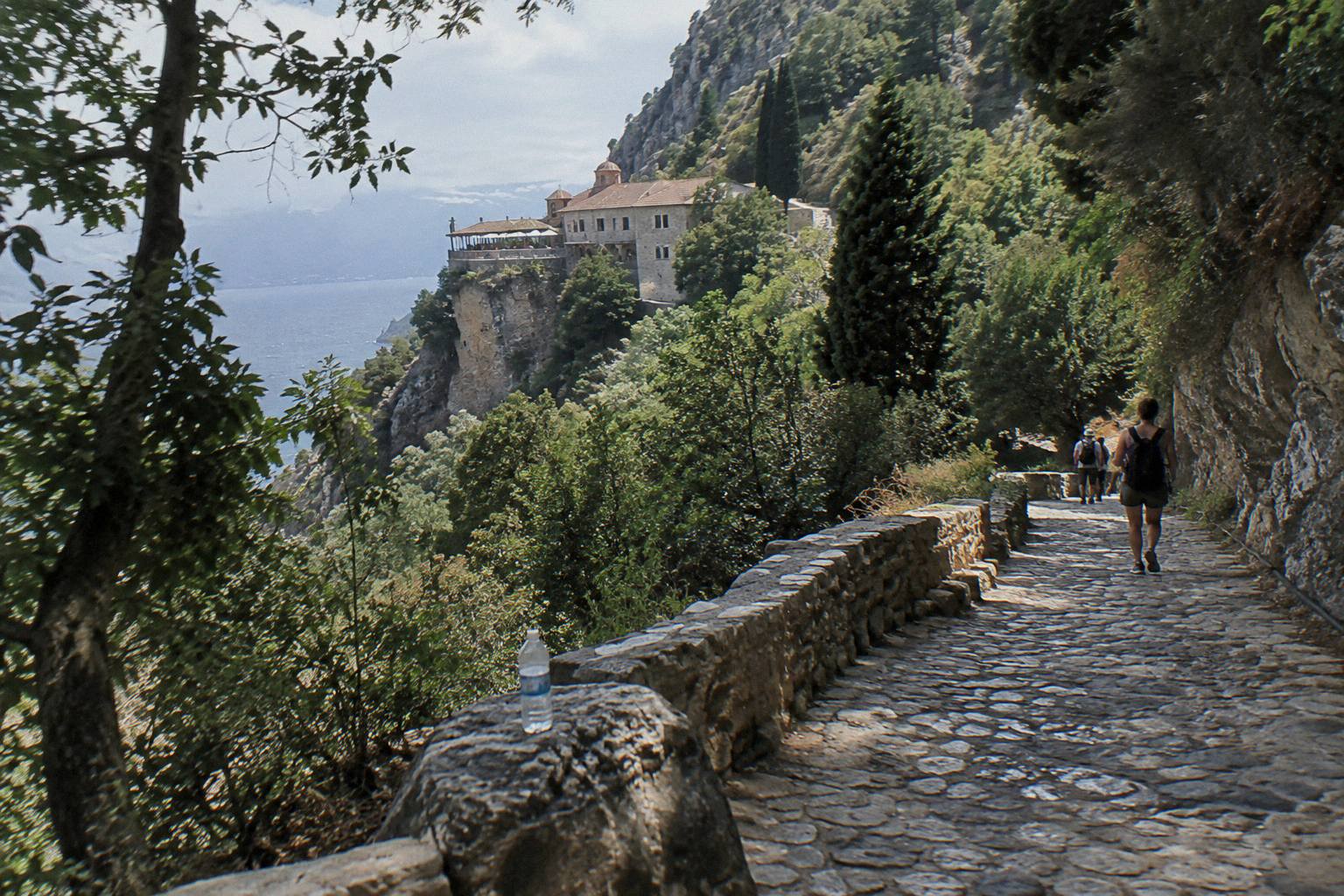
Closed-toe trainers or light walking shoes with a rubber grip are the right call. The paths are cobblestone and steep in places, crossed by wooden bridges over the Pelekanos river, and the operator lists the route as unsuitable for anyone who cannot manage rough ground. Sandals and flip-flops work only for the flat lower section near the entrance.
Think about what the ground actually does underfoot. Cobbles that were laid by hand are uneven by design, each stone a slightly different height and angle, so a thin sole transmits every edge into your foot within the first few hundred metres. The wooden bridges over the ponds and along the waterfalls are another matter: timber stays damp in permanent shade, and a smooth plastic sole slides on it far more easily than a rubber tread. None of this needs a proper hiking boot. A ordinary pair of trainers in decent condition is enough for almost every visitor; the people who regret their shoes are the ones who arrived in beach footwear straight from the hotel pool.
There is a second reason for closed toes, and it is simpler: the trail is narrow in places, shaded, and edged by roots and stones. An open sandal exposes the foot exactly where the ground is most uneven. If you are touring Rhodes with limited luggage and only have room for two pairs of shoes, the pair that works on cobbles is the pair to bring here, and the beach pair can wait at the hotel. The walk to the monastery alone is 1.3 km one way on this surface, as described on the operator's own official valley site, so the total outing on foot is closer to 3 km once you include the return and the lower valley.
One honest caveat about the season: the valley opens 12 April and closes from 1 November until the next tourist season, with the moths present from May to September. Earlier and later in that window, mornings can be cool and the ground under the trees damper than the beach suggests, which is another small vote for a shoe with tread over anything smooth-soled.
If a coach day sounds more your pace than a hike, the Coach Trip, Seven Springs Included from Manos Going is the most reviewed tour on this site at 4.6 across 214 reviews, from €29 per person, picking up in Faliraki, Rhodes City, Ixia and Ialysos. The valley entrance is paid separately on the day, and free cancellation applies up to 24 hours ahead. Full route details sit in the guide to the Butterfly Valley and Seven Springs day trip.
What Clothes Suit The Shaded Trail?
Light trousers or shorts plus a breathable top work for the walk itself, with a light layer for the start and end of the day. The trail runs in shade under the Sweetgum trees, so heavy sun cover is unnecessary on the path, but the open areas near the entrance and around Kalopetra monastery are exposed.
Start with the fabric, not the fashion. The valley's air under the trees is cooler than the car park, but you will still be climbing, and the return leg from the monastery is a steady descent that works the legs hard. A cotton t-shirt that soaks through and stays wet is less comfortable on the walk back than anything quick-drying. Long, loose trousers have a modest advantage over shorts: they protect against brushing vegetation along the narrow stretches of the path and take nothing away in comfort on a shaded trail. Shorts are entirely fine if that is what you have.
The layer question depends on when in the season you visit. Between May and September, when the Jersey tiger moths are present, a single top plus a light overshirt covers the whole day. In April or October, within the season but at its edges, the shaded valley holds the morning cool longer than the coast, so a light jacket or fleece for the first hour is sensible. No temperature figures are published for the valley, and none are needed: the advice is simply to have one layer you can remove, because the difference between the shaded trail and the open monastery slope is noticeable even in midsummer.
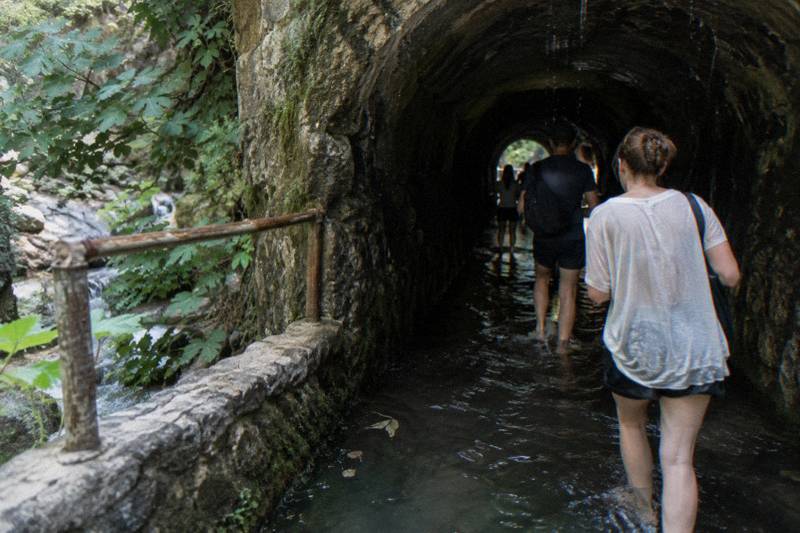
One clothing item to think twice about is anything you would mind getting splashed. The route passes springs, ponds and waterfalls along the Pelekanos river, and while you will not be wading, spray and damp railings are part of walking beside falling water. Keep phone and camera in a pocket that closes. For the question of how long the whole walk takes at a normal pace, the guide to how long you need at Butterfly Valley breaks the timing down.
If you would rather pair the valley with a sit-down coach ride and a hill viewpoint, the Filerimos Hill Coach Trip, 5 Hours from Kariba Travel runs from €21 per person, rated 4.1 across 41 reviews, with hotel pickup listed and free cancellation up to 24 hours ahead; the valley entrance is extra on the day. The pairing of the two sites is covered in the guide to Butterfly Valley and Filerimos Hill tours.
Do You Need Swimwear Or A Towel?
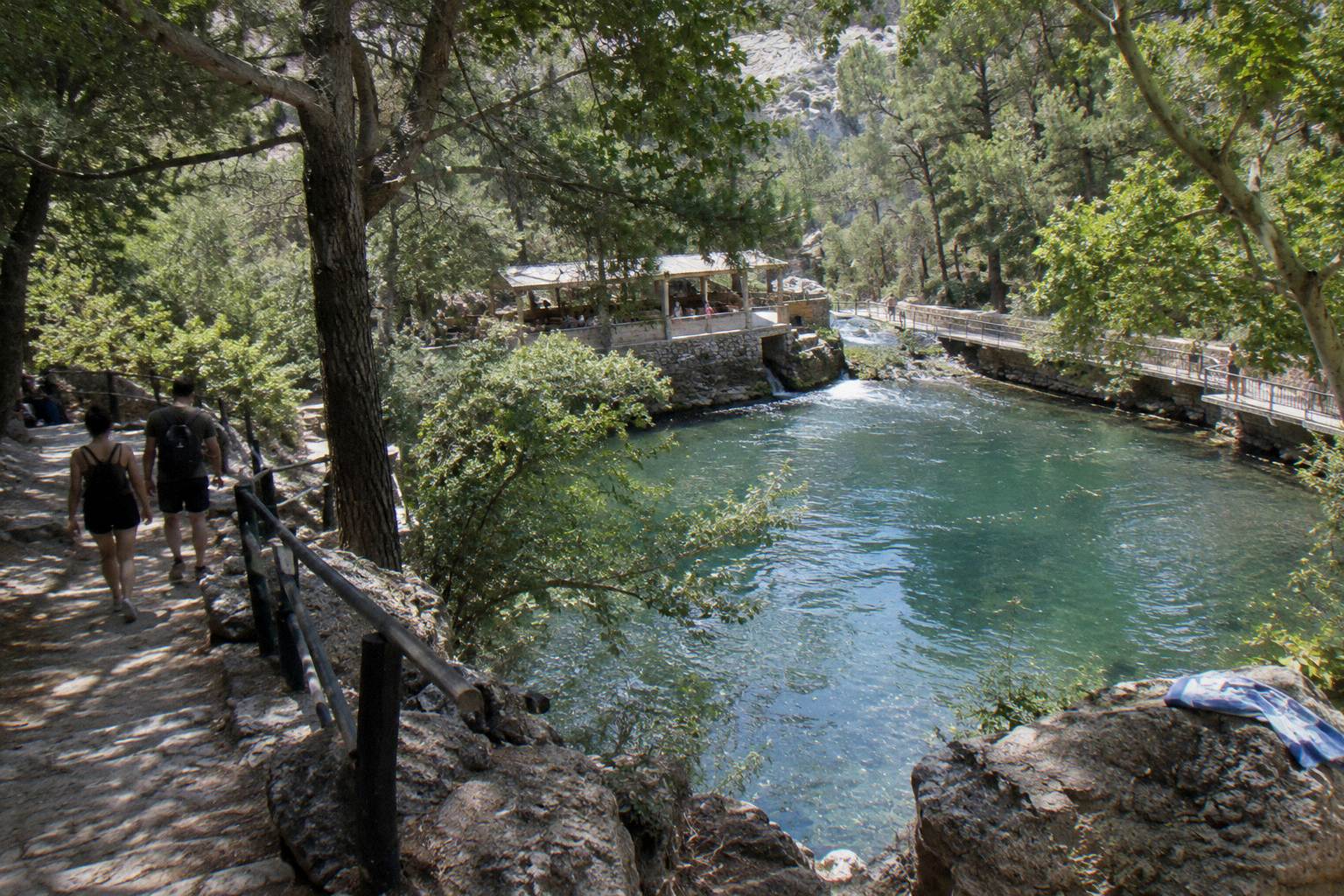
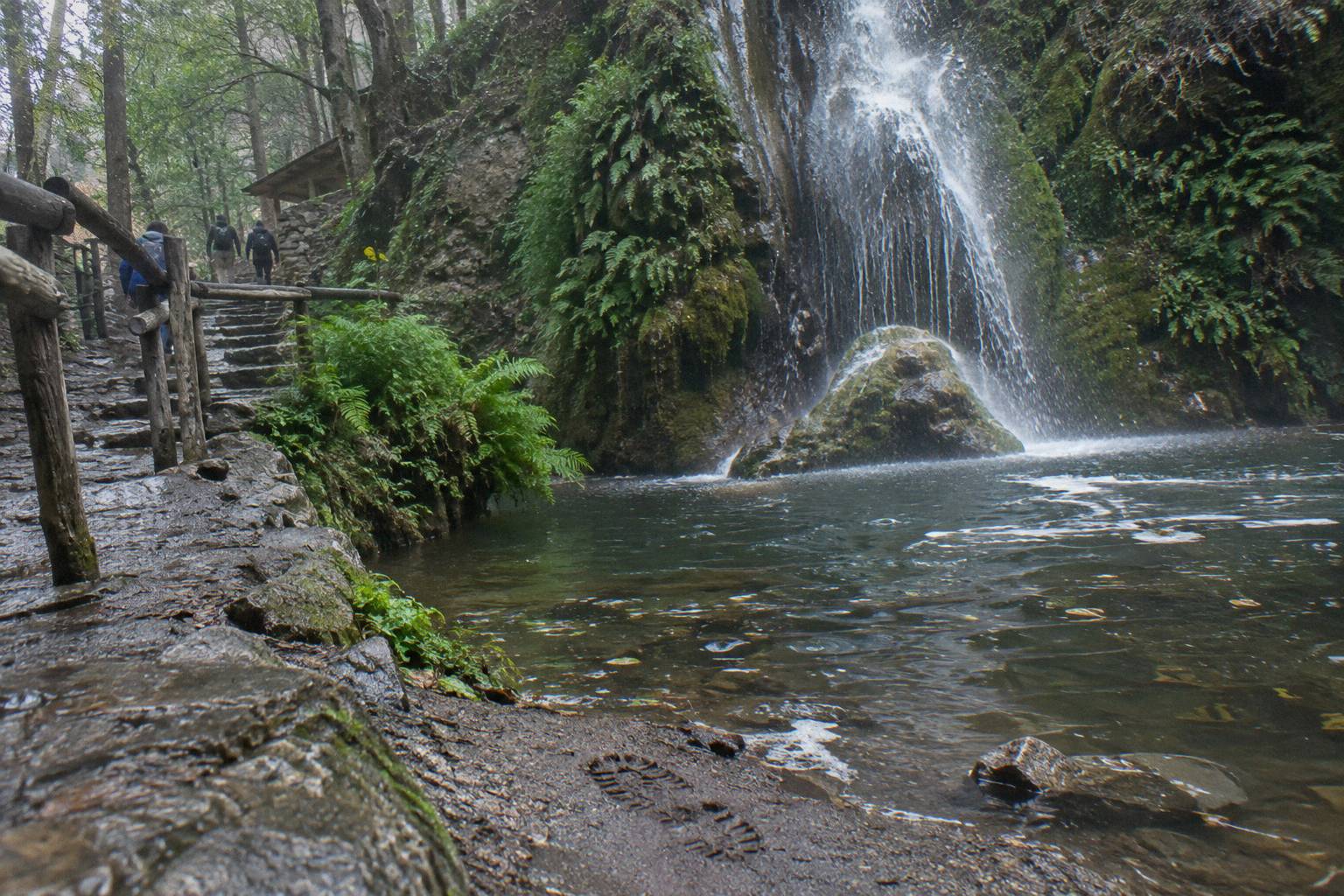
No. There is no swimming on the valley trail, and the ponds and waterfalls along the Pelekanos river are for looking at from the wooden bridges and paths, not for entering. A small towel is only worth packing if you want it for a beach stop afterwards on the same day.
This question comes up because the trail description mentions ponds and waterfalls, and because most visitors are on a beach holiday where water means swimming. The valley is a protected biotope, one of the only places in Europe where the Oriental Sweetgum grows, and the water features are part of the habitat that draws the moths, which the species page says are attracted by the trees' resin and by the humidity. The points where the trail meets the water are crossings and viewpoints, not bathing spots. Save the swimwear for the coast: the valley is about 10 km from the airport in the island's north, and the nearest beaches are a short drive back towards the coast road.
What a towel is genuinely useful for on this walk is none of the obvious things. If you carry a small one, it earns its space for wiping hands after the wooden bridges, or as a sit mat if you pause at one of the ponds. That is a nice-to-have, not advice. The more useful item in the same pocket of your bag is a small water bottle, covered in the next section.
For families weighing up the same question with children in tow, the blog post on whether Butterfly Valley suits kids and pushchairs goes into the terrain in detail; the short version is that the steep natural paths rule out pushchairs and make carried children the practical option.
What Should Go In Your Day Pack?
Water, a hat, sun cream and a phone or camera in a closing pocket cover it. The trail takes a couple of hours at walking pace, the paths are steep in sections, and although the walk itself is shaded, the open areas around the entrance and the monastery catch full sun.
Water is the non-negotiable item. The round trip including the 1.3 km monastery leg is close to 3 km of walking with real climbing, and the season runs through the hottest months of the Rhodes year. How much to carry is a personal call, but one small bottle per person is a sensible floor for a morning, more if you are visiting with children or walking slowly. There is no need to plan around refill points on the trail itself; treat what you carry as what you have.
The rest of the pack writes itself. A hat for the open stretches. Sun cream applied before you set out, since most of the walk will not need reapplication under the trees. Your phone or camera in a secure pocket, because the wooden bridges and damp railings along the water are exactly where a phone slips. And nothing valuable loose in a back pocket, since you will be sitting on stone ledges if you stop to rest.
The one thing to leave behind is noise. The valley's administration page states plainly that visitors keep quiet so as not to disturb the moths, which rest on trunks, leaves and rocks by the water during the day; the rule is summarised on the operator's species page. That is a request about behaviour rather than clothing, but a speaker or anything that plays sound belongs nowhere on this trail. If you want to know what the quiet is protecting, the guide to Petaloudes moths, not butterflies explains the Jersey tiger in full.
Is There A Dress Code At Kalopetra Monastery?
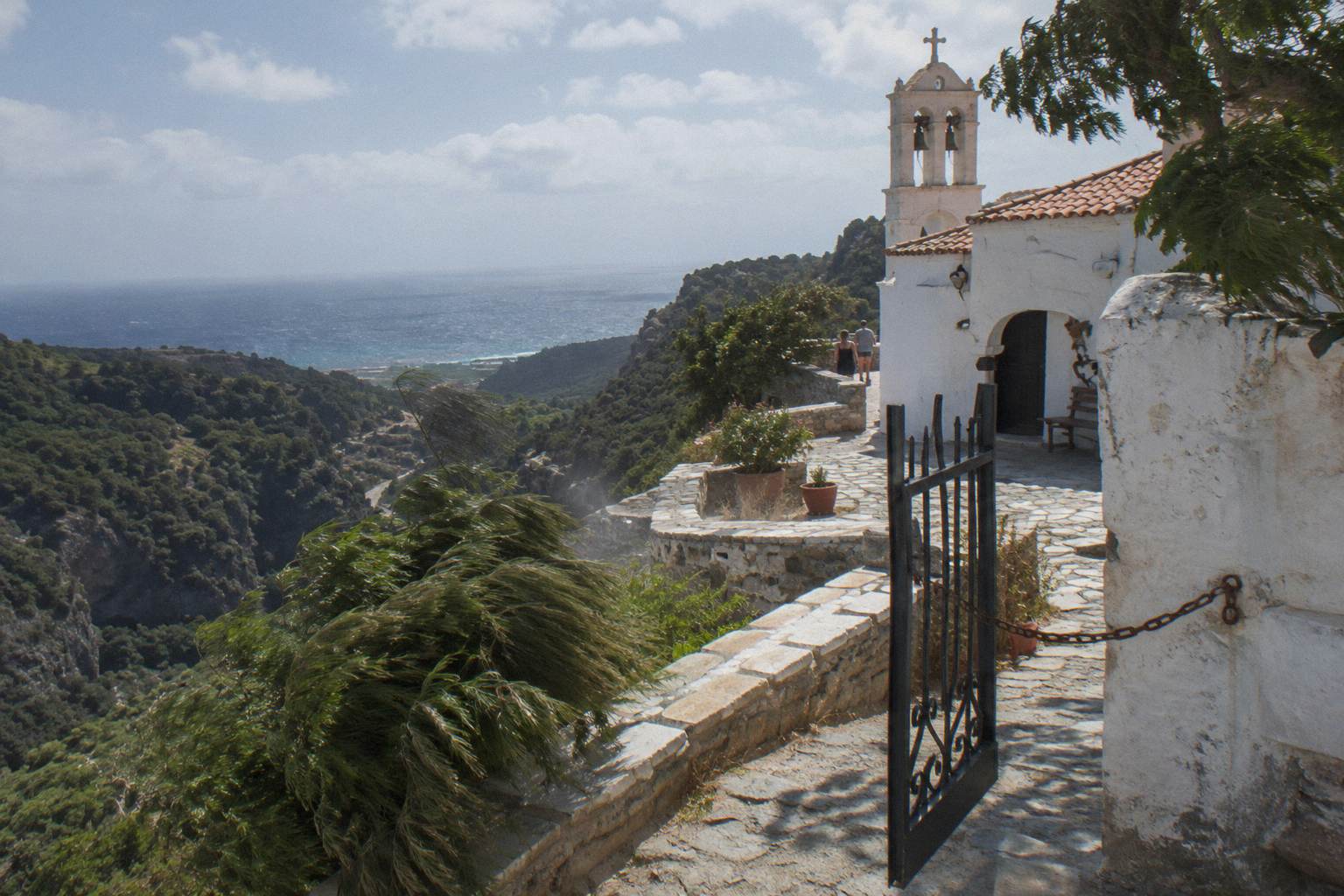
No dress code for the monastery is published by the valley operator, but as an active Greek Orthodox site, modest dress is the respectful choice: covered shoulders and knees, which is easily solved with the light layer you are carrying anyway. The monastery sits at about 370 m at the end of the trail.
The valley's own pages describe Kalopetra in detail: dedicated to the Assumption of the Virgin Mary, perched on a slope of Mount Lefkopoda, with the site's history page crediting its founding in 1782 to Alexandros Ypsilantis after a vow made in a storm. What the operator does not publish is a visitor dress code, and no tour listing on this site claims one. So treat this as the general convention for Orthodox monasteries in Greece rather than a valley rule: shoulders covered, knees covered, hat off inside if you enter the church. A light overshirt or the wrap you brought for the cool morning solves all of it without planning.
This is also the section of the walk where your layer earns its keep twice. The monastery is the exposed high point of the route, and the climb to it is the steepest stretch of the trail. You will want the layer off on the way up and possibly back on at the top, where the slope catches whatever breeze is running. The same page also mentions a Museum of Natural History on the site, which makes the top of the trail a place you may linger rather than a quick turnaround.
For a shorter outing that skips the walking altogether, the Half-Day Bus, Filerimos Stop from Kariba Travel runs from €25 per person with pickup from northern Rhodes hotels listed, stopping at Filerimos Hill; it carries no rating read on its listing, the valley entrance is extra on the day, and free cancellation is stated up to 24 hours before departure. How the bus and coach options stack up is set out in the guide that compares Butterfly Valley tours from Rhodes.
Does The Season Change What You Pack?
Slightly, but less than you might expect. The valley is open from 12 April to 31 October, 08:00 to 18:00 daily, and the trail stays shaded throughout, so the core kit is the same in every month. The edges of the season add a warmer layer for the morning; midsummer adds more water.
The table below sets out how the kit shifts across the season. It is planning advice built on the valley's published hours, season dates and trail description, not an operator packing list, because no such list exists.
| Season window | Trail conditions | What to add or change |
|---|---|---|
| April to mid-June | Shaded, cooler mornings, quieter paths | Light jacket or fleece for the first hour |
| Late June to September | Shaded trail, hottest months, moths present | More water per person, hat essential in open areas |
| Late September to October | Shaded, cooling again, valley closes 31 October | Layer for morning, check hours before late visits |
Two practical notes round this out. First, the adult ticket is printed by the valley only as EUR 3 to 6 depending on the season, with children under 12 free, and the lower figure sits at the season's edges; that is a reason in itself that April, June and October visits feel different, quieter as well as cooler. Second, whatever month you visit, the hours are fixed at 08:00 to 18:00, so an early start puts you on the trail in the coolest part of the day. The full timing picture, including the shoulder-season question, is in the post on whether Butterfly Valley is worth it outside the season.
For a full-day outing that takes the walking decision out of your hands, the West Coast Villages Day Trip from TUI HELLAS pairs the valley with Ancient Kamiros, Embonas and Siana over 8 hours, from €60 per person with free cancellation up to 24 hours ahead; its listing shows 4 reviews, too few for a star claim, and the valley entrance is extra on the day. The wider island picture, including other routes that call at the valley, is in the guide to Rhodes island tours that stop at Butterfly Valley.
Whatever you book, the outfit advice above stays the same: gripped shoes, light layers, water, and a quiet voice on the trail. The rest of the day takes care of itself.
Common Questions About What To Wear At Butterfly Valley
What Should You Wear To Butterfly Valley In Rhodes?
Closed-toe shoes with grip, light clothing you can climb in, and a light layer for the start of the day. The trail is 1.3 km over cobbles and wooden bridges on steep natural ground, mostly in shade. There is no published dress code; the valley only asks visitors to keep quiet.
Can I Wear Sandals Or Flip-Flops On The Trail?
Only on the flat lower section near the entrance. The cobbled paths are uneven and the wooden bridges over the Pelekanos river stay damp in shade, so a smooth sole slides. Closed-toe trainers or walking shoes are the practical choice for the monastery leg.
Do I Need Swimwear For The Waterfalls?
No. The ponds and waterfalls along the trail are part of the protected habitat and are viewed from the bridges and paths, not entered. Swimwear belongs on the coast, not in the valley.
Is There A Dress Code At Kalopetra Monastery?
No dress code is published by the valley operator. As an active Greek Orthodox site, the respectful convention is covered shoulders and knees, which a light layer solves; a hat comes off if you enter the church.
What Should Go In My Day Pack For The Valley?
Water, a hat, sun cream and a phone in a closing pocket. The round trip including the monastery is close to 3 km with real climbing, and the open areas around the entrance and the monastery catch full sun even though the trail is shaded.