Petaloudes Explained: Why The Butterflies Are Really Jersey Tiger Moths
Petaloudes means butterflies, but the insects in the valley are Jersey tiger moths. The May to September window matters more than the name, and here is how to plan around it.
Short answer
The famous butterflies of Petaloudes on Rhodes are Jersey tiger moths (Panaxia quadripunctaria), a nocturnal moth the valley's own species page lists from May to September. The valley sits at Ano Kalamonas, about 26 km from Rhodes Town, open 08:00 to 18:00 in season, entry EUR 3 to 6 by season, free for under 12s.
The name is a generous translation. Petaloudes, the Butterfly Valley of Rhodes, is named for its insects, but the valley's own species page is precise about what they are: not butterflies at all, but Jersey tiger moths, Panaxia quadripunctaria, a nocturnal moth that spends its days resting on trunks, leaves and rocks beside the water. The valley is run by DERMAE, the local operator whose official site carries the species details, the opening calendar and the ticket table. For a visitor deciding when to come, the moth fact is not trivia. It is the reason the May to September window exists, and the reason a quiet valley in October can still be beautiful while holding almost nothing that flies.
The site itself publishes this research plainly. At Butterfly Valley Rhodes the aim is to say what is actually in the valley, on what dates, at what cost, without rounding the truth into a slogan. This guide covers the species, the season, the sweetgum trees the moths are drawn to, the trail they live along, and how to pick a tour or a solo visit around the flight window. The valley's own material can be read at the official species page for Panaxia quadripunctaria, which is the primary source for everything said about the moth below.
Are The Butterflies In Petaloudes Actually Moths?
Yes. The insects in the valley are Jersey tiger moths, Panaxia quadripunctaria (also written Euplagia quadripunctaria), a nocturnal moth from the family Arctiidae, not butterflies. "Butterfly Valley" and "Petaloudes" are local and tourist names. The moths rest by the water through the day and fly when disturbed, showing red and yellow wings. The valley's species page lists them from May to September.
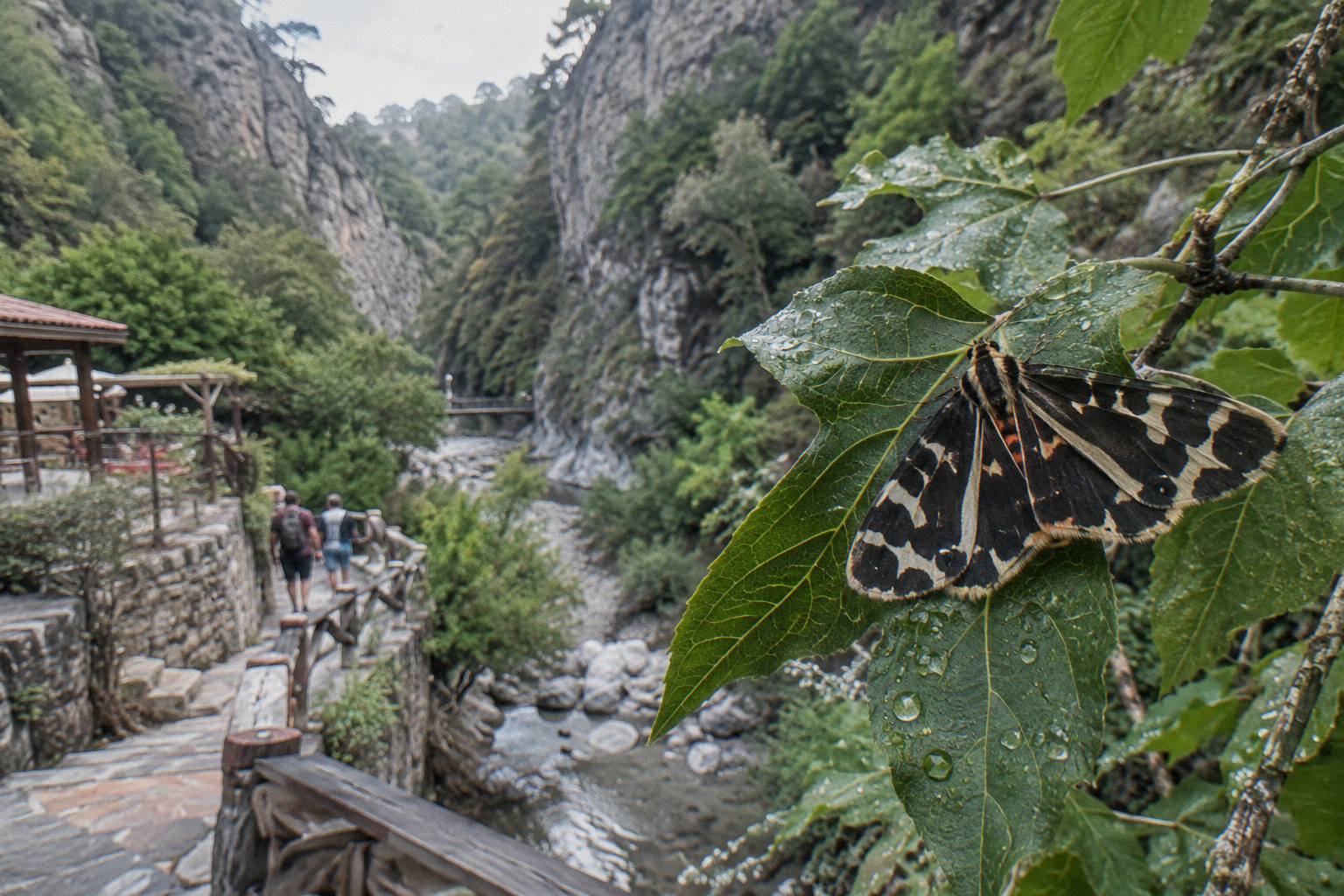
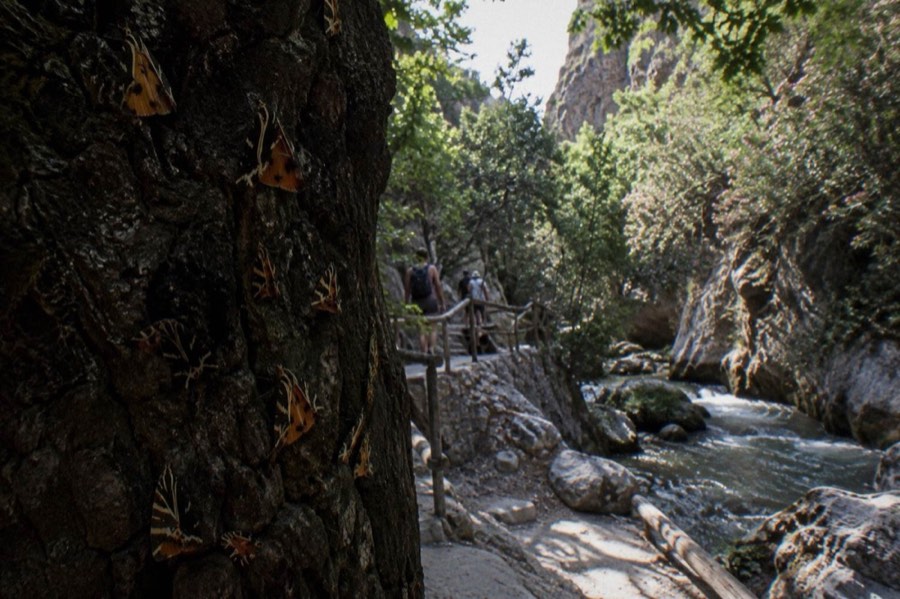
The distinction is more than pedantry, because it changes how you should behave and what you should expect to see. A butterfly is typically active in daylight, feeding on flowers and moving constantly. The Jersey tiger is a moth, and the valley's own description says it spends the day at rest: on tree trunks, on leaves, on the rocks beside the pools of the Pelekanos river. When something wakes it, it takes off in a burst, and the valley's text describes the effect plainly, a cloud of red and yellow wings. That flash of colour is the sight everyone photographs. It only happens when the resting moths are disturbed, which is exactly why the valley asks for silence and calm.
The name "butterfly" is not a marketing invention of tour companies. Petaloudes is simply the Greek word for butterflies, and it is attached to the place on maps, on road signs and in decades of guidebooks. The official operator, DERMAE, uses the moth's correct scientific identity on its own site while keeping the Butterfly Valley name for the attraction. Both are honest: the place is called Butterfly Valley, and the animals are Jersey tiger moths. A visitor who knows this arrives with the right expectations, looks at trunks and shaded rocks rather than at flowers, and understands why the signs ask for quiet.
| Fact | Butterfly (typical) | Jersey tiger moth (Petaloudes) |
|---|---|---|
| Active hours | Daylight | Nocturnal; rests through the day |
| Daytime behaviour | Feeds on flowers, moves constantly | Sits on trunks, leaves and rocks by the water |
| Where to look | Open flowers and sun | Shaded stream banks and sweetgum trunks |
| Disturbance effect | Flits away singly | Rises as a cloud of red and yellow wings |
| Visitor rule implied | None special | Silence, the valley's one stated rule |
There is a second naming trap worth clearing up before you book anything. There are other "butterfly valleys" in the Aegean world, including one near Fethiye in Turkey and a Petaloudes on Paros. This article, and every tour on this site, refers to one place only: the Butterfly Valley at Ano (Epano) Kalamonas in the north of Rhodes, about 26 km from Rhodes Town and 10 km from the airport. If a search result or a review mentions a boat trip to a Turkish valley, or a quiet Parian village, it is a different destination with a different species list and different logistics.
For the full timing picture, the guide to when the butterflies come out in Rhodes goes deeper on month by month expectations. The short version: the valley opens in April, but the moths arrive on their own schedule in May and leave by the end of September.
When Are The Jersey Tiger Moths Actually In The Valley?
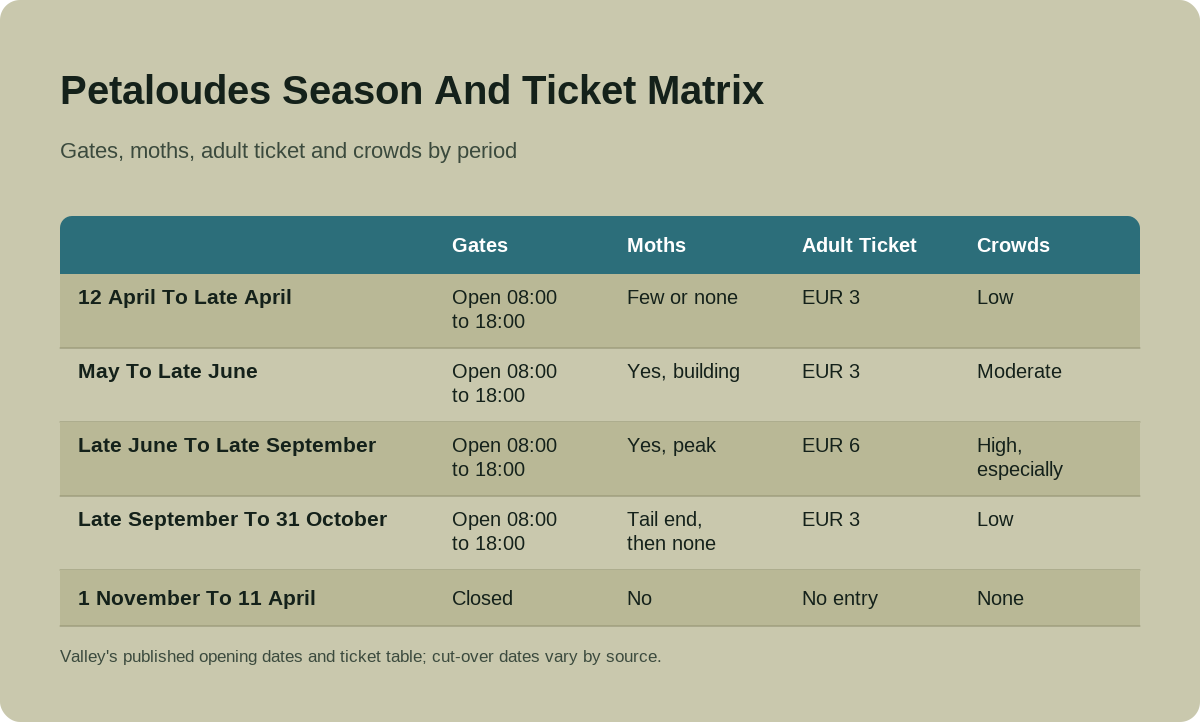
From May to September, per the valley's own species page. That is the flight season for Panaxia quadripunctaria at Petaloudes. The valley itself stays open longer, from 12 April until 1 November, 08:00 to 18:00 daily, so a visit in late April or October sees the gorge, the river and the trees but few or no moths. Adult entry is EUR 3 to 6, by season, and children under 12 enter free.
The gap between the opening season and the moth season is the single most important planning fact on this page, and it is the one most first-time visitors miss. The valley's official site announces an opening on 12 April and a closure from 1 November until the next season, with daily hours of 08:00 to 18:00. That is when the gates, the paths, the bridges and the museum are open to walkers. The moths are not employed by the gate. The species page records their presence in the valley from May to September, drawn by the humidity and, probably, by the resin of the sweetgum trees, as described at the valley's own description of its biotope.
Practically, this produces three distinct visitor experiences within one open season. In the shoulder weeks of April and October, you get the landscape: the shaded gorge, the Pelekanos river, the ponds and waterfalls, the wooden bridges, the walk to Kalopetra monastery, all in cooler air and thinner crowds. From late May through June, the moths build up and the valley is green and quiet, with the lower EUR 3 ticket for part of that window. From late June through September, the moths are at their most numerous, the ticket steps up to EUR 6, and the walks are busiest, particularly in the middle of the day.
The ticket structure follows the moth calendar closely enough to be a useful proxy. The valley's published table shows adults at EUR 3 early in the season, EUR 6 across the high summer weeks from late June to late September, and EUR 3 again in the autumn weeks to the end of October. The site's own pages are not perfectly consistent about the exact cut-over dates, so this site prints the safe version everywhere: EUR 3 to 6, by season, with under 12s free. If you want the precise price for your exact date, the valley lists contact numbers on its official site, and the valley's visitor information page carries the current table.
| Period (open season) | Gates | Moths present | Adult ticket | Crowds |
|---|---|---|---|---|
| 12 April to late April | Open 08:00 to 18:00 | Few or none | EUR 3 | Low |
| May to late June | Open 08:00 to 18:00 | Yes, building | EUR 3 | Moderate |
| Late June to late September | Open 08:00 to 18:00 | Yes, peak | EUR 6 | High, especially midday |
| Late September to 31 October | Open 08:00 to 18:00 | Tail end, then none | EUR 3 | Low |
| 1 November to 11 April | Closed | No | No entry | None |
For the walking side of an October or April visit, when the landscape is the whole point, see the guide to the trail, its steps and Kalopetra monastery, which covers the 1.3 km monastery climb in detail.
Why Do The Moths Gather In This One Valley?
The moths are drawn, probably, by the resin of the Oriental sweetgum trees (Liquidambar orientalis, locally called Zitia) and by the valley's humidity. The valley is one of the only biotopes in Europe with these trees. The Pelekanos river, its springs and ponds keep the gorge cool and damp through the dry Rhodian summer, which is why Panaxia quadripunctaria concentrates here in such numbers.
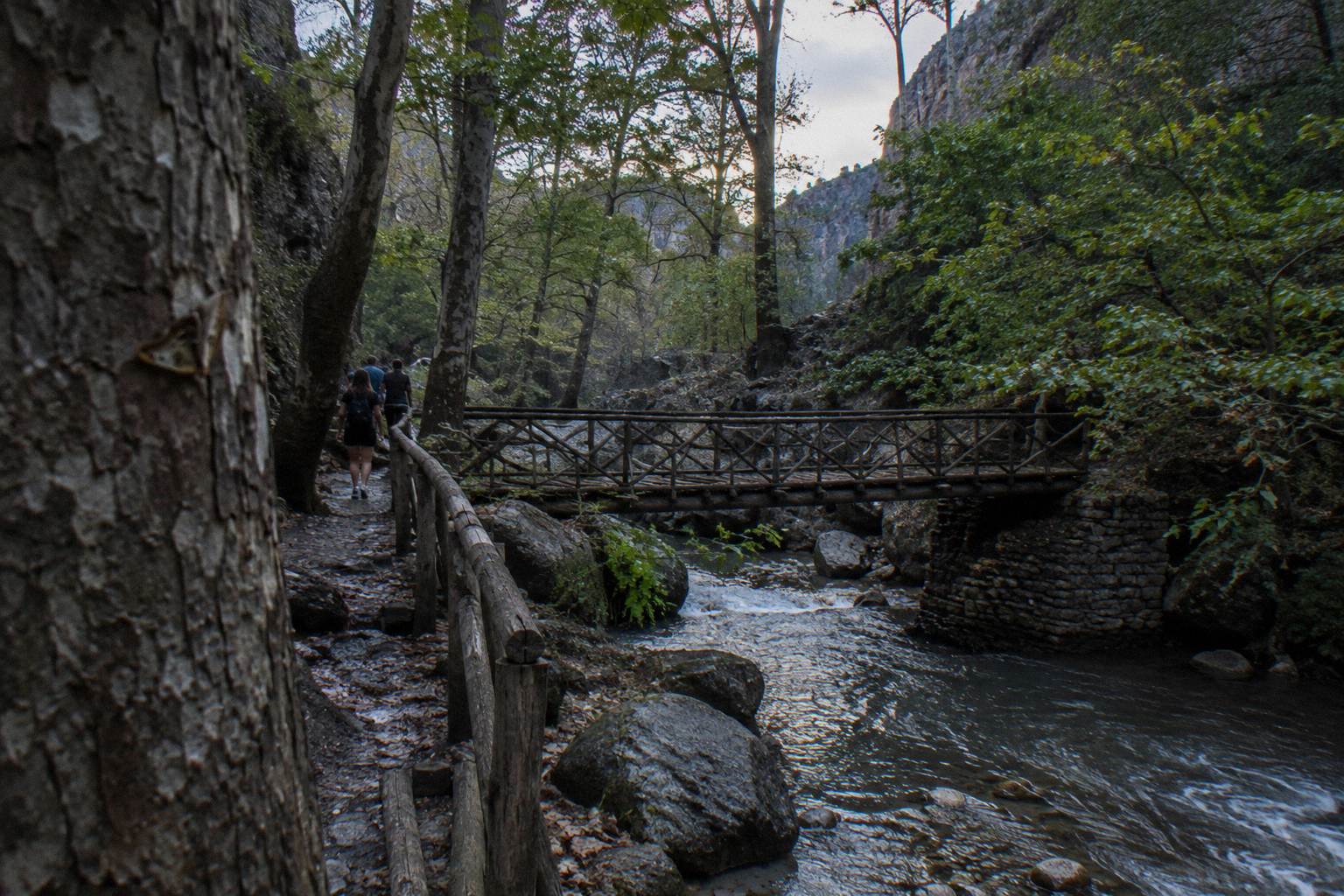
The valley's own explanation, on its about page, gives two reasons for the moth concentration, and it is honest enough to hedge the first one. The moths are attracted, probably, by the resin of the Oriental sweetgum, a tree the site calls one of the rarest elements of the biotope: this gorge is one of the only places in Europe where Liquidambar orientalis grows in this concentration. The local name, Zitia, appears on valley signage, and the trees are the reason the gorge stays green and scented when the surrounding hillsides have dried to straw by July.
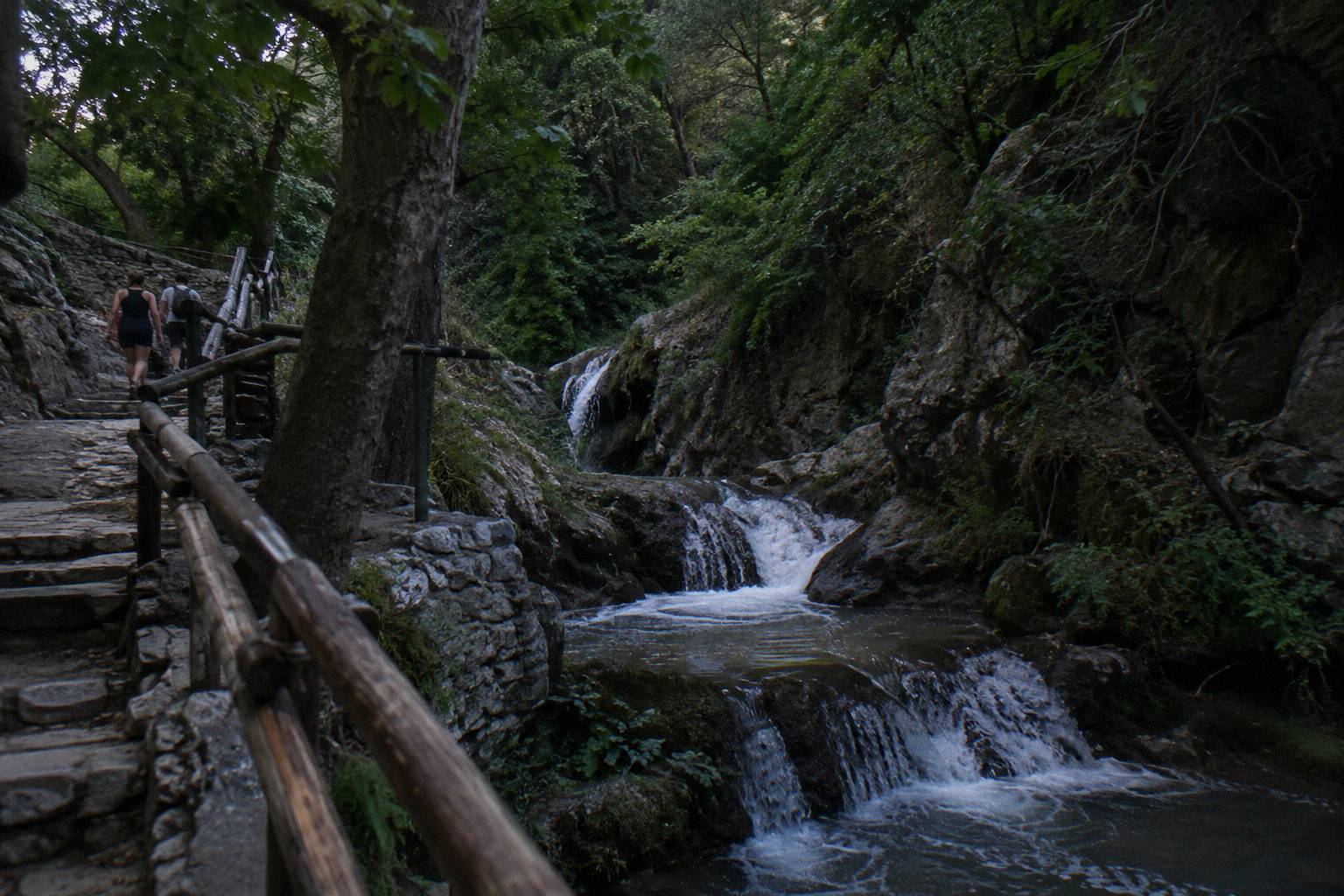
The second reason is simpler and undisputed: humidity. The Pelekanos river runs through the gorge, fed by springs, and the valley's trail passes ponds, small waterfalls and wooden bridges over the stream. Water plus deep shade keeps the gorge measurably cooler than the coast in high summer, and a nocturnal moth that spends its day resting needs exactly that: cool, damp, shaded surfaces where it can sit invisible against bark and rock through the hottest hours.
This is also why the moths sit where they sit, and it tells you where to look. The species page says they rest on trunks, leaves and rocks by the water. A visitor who walks the cobbled path slowly, eyes on the shaded stream banks and the sweetgum trunks, will see far more than one who marches to the monastery and back. The red-and-yellow cloud effect happens when resting moths are disturbed and take flight together, which is why the valley's one stated rule for visitors is silence: the site's own administration page puts it as the only rule. Keep quiet, and the moths stay put and visible. Make noise, and you get your photograph of flying wings at the cost of exactly the disturbance the rule exists to prevent.
One honest caution: this site prints no population figure, no life-cycle dates and no claims about the moth beyond what the valley's own pages state. Numbers vary year to year with weather and water, and any blog promising "millions of butterflies" is not quoting a source.
Does Visiting Outside May To September Make Sense?
Yes, if you come for the landscape rather than the moths. The valley is open from 12 April to 1 November, 08:00 to 18:00, so April, early May and October visits get the shaded gorge, the river, the bridges and the 1.3 km walk to Kalopetra monastery without moth-season crowds. If the moths are your reason for coming, book inside May to September, ideally late June to August.
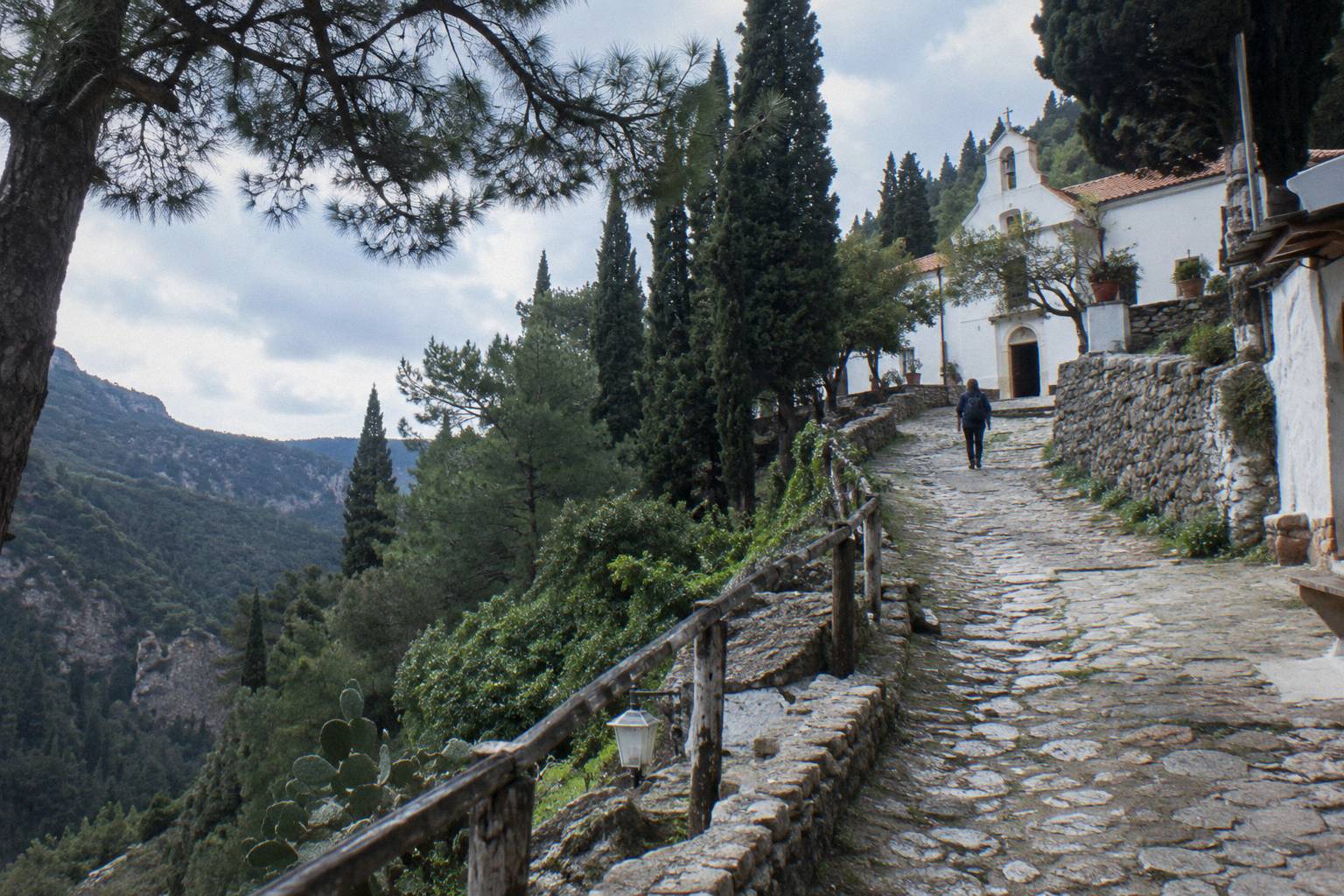
The shoulder-season question comes up constantly in reader mail, and the honest answer splits by motive. The valley is a genuinely lovely walk in any open month: a shaded gorge with a river, wooden bridges, waterfalls and cobbles, ending at the Kalopetra monastery, dedicated to the Assumption of the Virgin Mary, at about 370 m on a slope of Mount Lefkopoda. The monastery's own history page dates its founding to 1782, when Alexandros Ypsilantis built it after a vow made in a storm; the name means "good stone". None of that depends on a single moth being present.
What you lose outside the moth window is the thing the valley is famous for. In late April and October the gorge is quiet and the trunks by the water are simply trunks. Some visitors find this a fair trade: cooler walking weather, empty paths, cheaper nearby hotels and the EUR 3 end of the ticket scale. Others feel the valley without its insects is a nice walk that does not justify a dedicated trip. Both reactions are reasonable, and knowing which one is yours before you book is the whole point of this section.
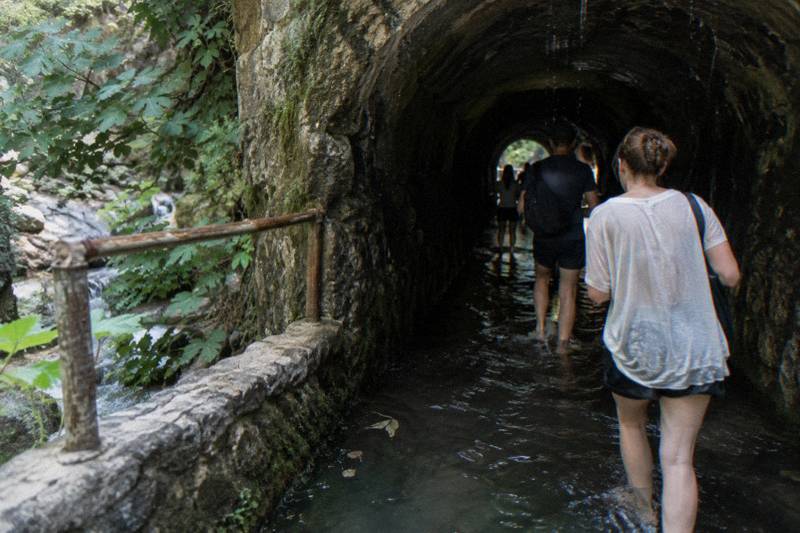
The terrain is the same in every month, and it deserves one plain warning repeated from the valley's own home page: the paths are steep and natural, and the site states plainly that the valley is not accessible for people with disabilities. Cobblestones, steps and uneven rock are the surface for the whole walk, harder for anyone with limited mobility, and closed shoes beat sandals in every season.
If a quieter, walking-first visit appeals, the Small-Group Hike, 4 Hours from Hiking rhodes runs from €55 per person with the valley entrance included per its listing, free cancellation up to 24 hours before, and 1 review so far. You can check availability alongside the details on our own hike coverage.
Which Tours Actually Depend On The Moth Season?
Every tour that sells the valley on its insects depends on the May to September window: coach trips, small-group hikes and the cheap half-day buses all show you the same gorge, so their value tracks the moth calendar. Landscape-led options, like Filerimos combos and full island loops, hold up in shoulder months because their main stops are ruins, villages and viewpoints rather than insects.
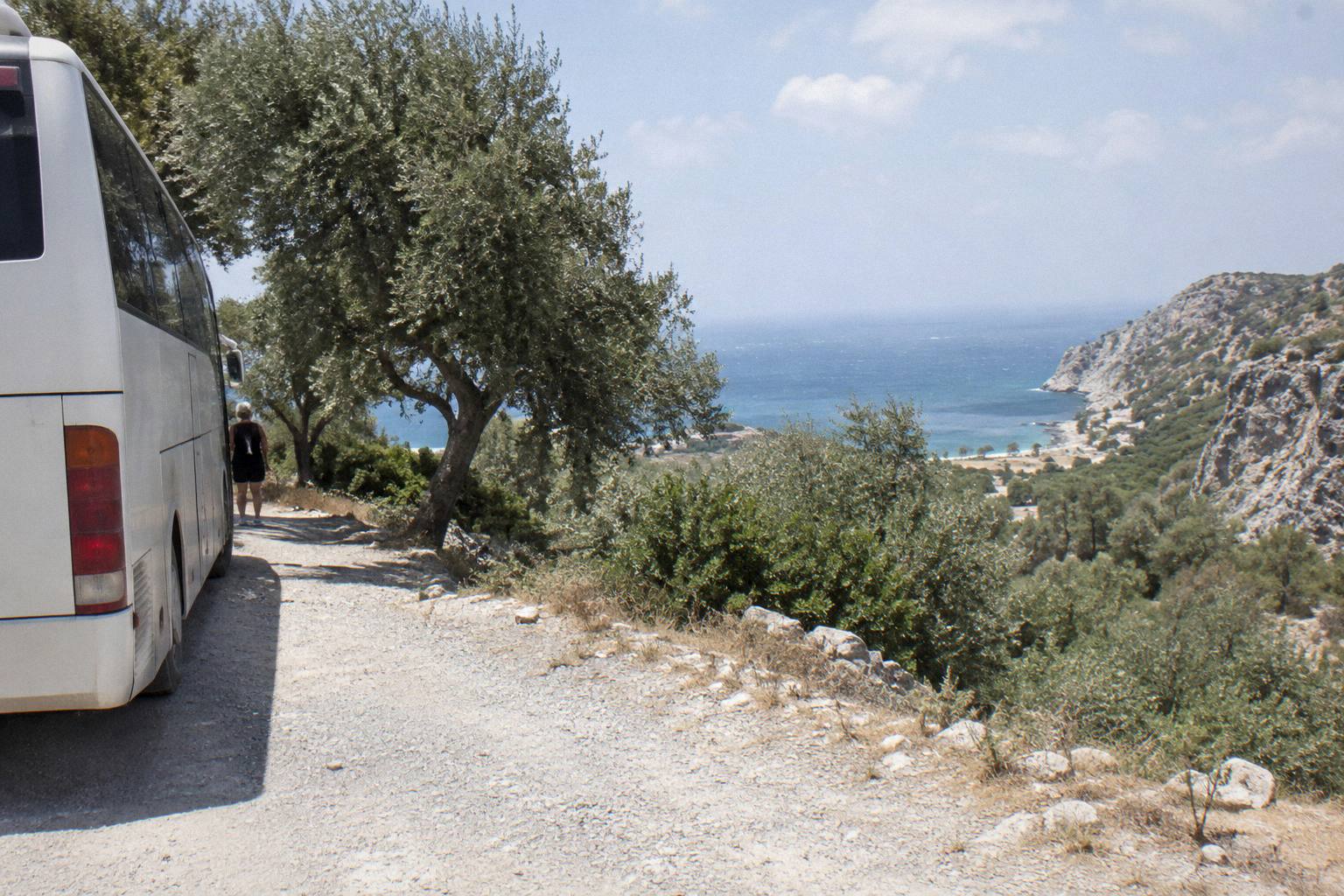
This is the practical payoff of everything above. A tour that gives you two hours in the valley in mid-July sells you the red-and-yellow cloud, the sweetgum shade and the crowds. The same tour in late October sells you a beautiful empty walk. Neither listing will frame it that way, so the buyer has to do the framing. The roster on this site splits cleanly into valley-first products, where the moth season is decisive, and valley-plus products, where it is only one factor among several.
The valley-first group includes the coach and small-group day trips in the category this page sits in. The headline option is the Coach Trip, Seven Springs Included from Manos Going: 7 hours, pickups listed in Faliraki, Rhodes City, Ixia and Ialysos, from €29 per person, rated 4.6 across 214 reviews, the most-reviewed tour on this site. Its valley entrance is an extra paid on the day. The full comparison of these products lives in the guide to Butterfly Valley tours from Rhodes compared, and the tour's own page, Coach Trip, Seven Springs Included, carries the live listing.
The valley-plus group is where shoulder-season visitors should look. Trips that pair the valley with Filerimos Hill, Kamiros, Embonas or a full island loop keep most of their value in April and October, because monasteries, acropolis views and village wineries do not migrate. The table below sorts the main named options by how much the moth window matters to what you are paying for.
| Tour (operator) | From | Duration | How much the moth season matters |
|---|---|---|---|
| Coach Trip, Seven Springs Included (Manos Going) | €29 pp | 7 hours | High: the valley is the headline stop |
| Small-Group Hike, 4 Hours (Hiking rhodes) | €55 pp | 4 hours | High: the whole product is the valley trail |
| Filerimos Hill Coach Trip, 5 Hours (Kariba Travel) | €21 pp | 5 hours | Medium: split between hill and valley |
| West Coast Villages Day Trip (TUI HELLAS) | €60 pp | 8 hours | Medium: valley is one of several stops |
| 10-Hour Loop, Kamiros And Embonas (Top Euro Travel) | €55 pp | 10 hours | Low-medium: valley among many stops, entrance extra |
Two honest footnotes to that table. The Filerimos Hill Coach Trip carries a rating of 4.1 across 41 reviews, so it is a known quantity with a modest score, while the West Coast Villages Day Trip has 4 reviews and the 10-Hour Loop has no rating read at all: treat those as unproven rather than good or bad. And every from-price on this site excludes the valley ticket where the listing lists it as an extra, which is the case for most rows: budget EUR 3 to 6 per adult on the day, by season, with under 12s free.
Budget-minded readers should also know the floor of the market. The Budget Bus, Half Day from SEBECO LINES runs from €15 per person with pickups from Rhodes hotels, entrance as an extra; it has no reviews read, so print no rating here, only the fact that it is the cheapest per-person tour on this site. Its sibling, the Small-Group Seven Springs Trip from Rhodes-Tours at from €25 per person for 4 h 30 min, likewise carries no rating read. Both are pure valley season bets: cheap enough to gamble on, worthless outside the moth window unless you simply want the ride and the walk.
What Is The Valley's One Rule, And Why Does It Matter For Seeing Moths?
The valley's own administration page states that the only rule is silence. Visitors keep quiet so as not to disturb the resting moths, which spend the day on trunks, leaves and rocks by the water and only fly when woken. This site prints no fine amounts, no flash rule and no clapping rule, because the official source does not state them; the quiet rule is the one that is documented.
The logic of the rule is the logic of the species. Because Panaxia quadripunctaria is nocturnal, everything a daytime visitor sees depends on the moths staying asleep on their perches. A quiet walker passes within arm's reach of dozens of them without knowing it: the resting moth's forewings fold into a patterned camouflage that reads as bark and lichen. The red and yellow hindwings, the famous colours, stay hidden until the moth flies. So the very act of forcing the display destroys the conditions that made the moths viewable in the first place.
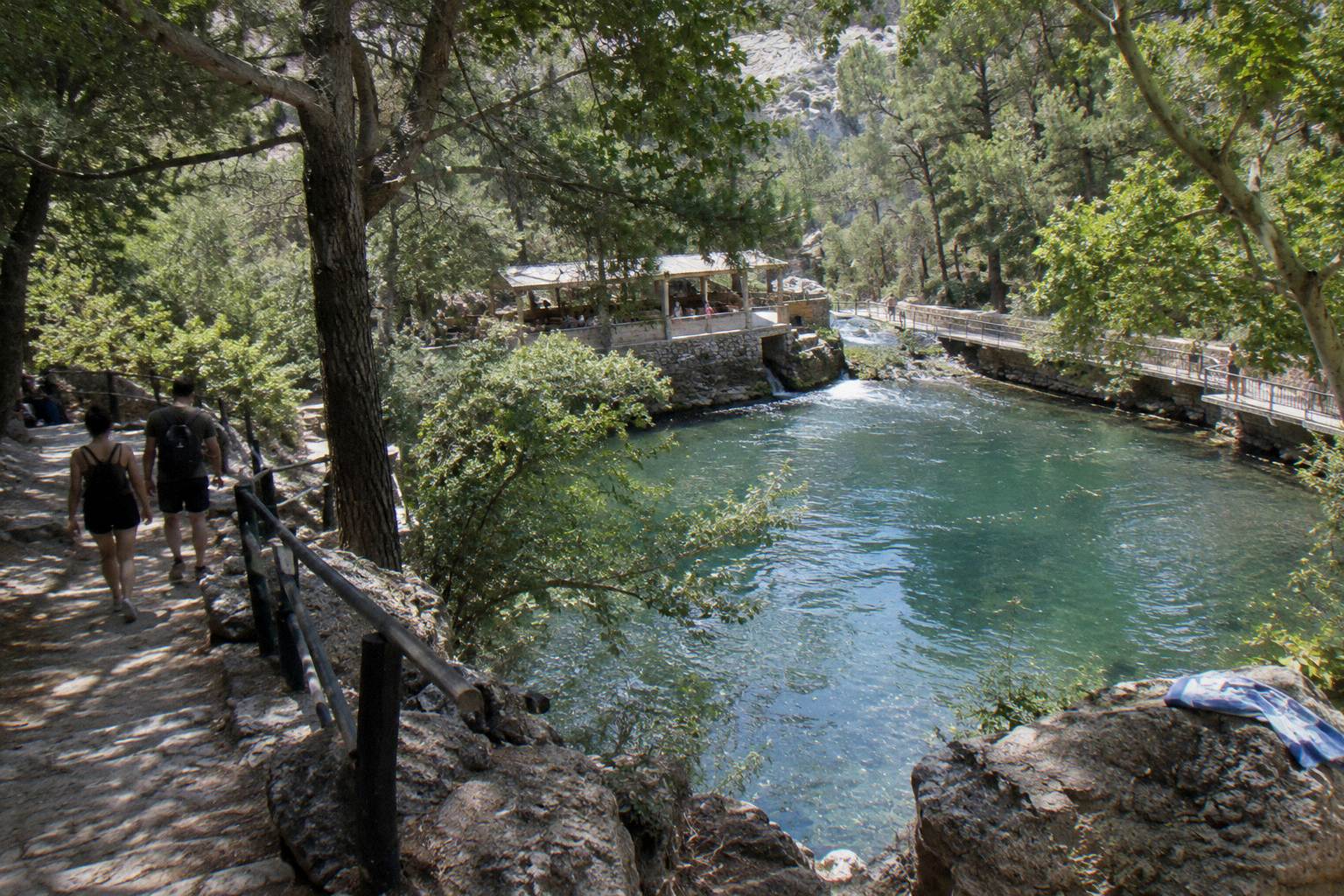
This gives a counterintuitive tip that most visitors never hear. The best moth viewing in Petaloudes is slow, silent and low-effort: stand by a pool, look at the shaded trunks and rocks at eye level, and wait. Within a minute or two, shapes resolve into moths, often dozens within a few metres. Visitors who troop along the cobbles chatting never see this layer at all. They only see the occasional disturbed moth flashing across the path, photograph that, and leave believing the valley holds a handful of insects.
A note on what this page deliberately does not say. Third-party summaries of the valley circulate rules about camera flash, dogs, smoking, clapping and on-the-spot fines. Some of these may well be enforced at the gate. But the valley's own official material documents only the silence rule, so that is the only rule printed here as fact. If a sign at the entrance on the day of your visit lists more, follow the sign.
The quiet rule also feeds into group size, which is a real argument for the smaller products. A 4-hour small-group hike moves through the gorge in a handful of people; a full coach unloads dozens at once. Both can be quiet or noisy in practice, but the odds favour the small format for anyone whose main goal is undisturbed viewing. That trade-off, price versus intimacy, is covered tour by tour in the comparison guide linked above.
How Should You Plan A Visit Around The Moth Calendar?
Pick your window first, then your tour. For moths, target late June to August, arrive at the 08:00 opening or after 16:00 for fewer people, and budget EUR 3 to 6 entry plus the tour price where entrance is extra. For the landscape alone, April or October works with the cheaper ticket. In every case, allow time for the 1.3 km monastery trail and wear proper shoes on the steep cobbles.
Pulling the whole picture together, the plan follows the calendar rather than the marketing. The decision sequence below is the one this site would use itself, built only from the verified facts above: the season dates from the valley's home page, the moth window from its species page, and the tour figures from the roster.
First, fix the date question. Are you travelling inside May to September? If yes, the moths are the prize and the visit deserves prime time: early morning at the 08:00 opening, when the gorge is coolest and the coaches have not yet arrived, or the late afternoon toward the 18:00 close. If your dates fall in April or October, decide honestly whether the landscape alone justifies the trip, and if it does, enjoy the cheaper ticket and the empty path.
Second, fix the format question. Independent visitors need the transport picture, which the guide to getting to the valley from Rhodes Town covers in full. Guided visitors should choose between the cheap buses (from €15 to €25 per person, entrance usually extra), the full-day coaches with a second stop (from €21 to €29 per person), or a small-group hike at from €55 per person with entrance included on at least one listing. Free cancellation with a 24-hour window applies to most of the roster, so booking ahead costs little flexibility.
Third, fix the on-the-day details. The valley lists 08:00 to 18:00 daily in season. The walk to Kalopetra monastery is 1.3 km of steep natural path, so the round trip plus valley time comfortably fills two to three hours. The terrain rules out pushchairs and wheelchairs per the valley's own statement. Carry water, wear grippy shoes, and keep the group quiet on the trail.
| Your situation | Best window | Format to lean toward | Rough all-in per adult |
|---|---|---|---|
| Moths are the whole point | Late June to August | Early-start coach or small-group hike | €15 tour + €3 to 6 entry, up to €55 with entry included |
| Moths plus a second sight | June to September | Seven Springs or Filerimos combo | From €21 to €29 + €3 to 6 entry |
| Landscape and monastery only | April, October | Any cheap bus or independent visit | From €15 + €3 entry |
| Maximum quiet on the trail | May to September | Small-group hike | From €55 with entry included |
One last roster note for visitors who would rather buy certainty than arithmetic. The Tickets Included, Three Stops option from Roads of Rhodes runs from €120 per person for 4.5 hours covering Filerimos Hill and Seven Springs with the valley entrance included per its listing; it has no reviews read. The Private West Side Tour, Group Rate from G.E.S. Travel Agency, from €400 per group for 5 hours, also lists the entrance as included. Neither is cheap, but both remove the pay-on-the-day step, which some travellers genuinely value.
Common Questions About Petaloudes And Its Moths
Are The Butterflies In Petaloudes Really Moths?
Yes. The insects are Jersey tiger moths, Panaxia quadripunctaria, a nocturnal moth. "Butterfly Valley" and "Petaloudes" are the local and tourist names for the place.
When Are The Moths In Butterfly Valley?
The valley's species page lists them from May to September. The valley itself is open longer, from 12 April to 1 November, so visits outside the moth window see the landscape but few or no insects.
Why Do The Moths Gather Only In This Valley?
The valley's own explanation points to the humidity of the Pelekanos gorge and, probably, the resin of its Oriental sweetgum trees, one of the only such biotopes in Europe.
Why Are Visitors Asked To Keep Quiet?
The moths rest on trunks, leaves and rocks by day and fly only when disturbed. Silence is the valley's one stated rule, so the resting moths stay in place and visible.
How Much Does It Cost To Enter The Valley?
Adult entry is EUR 3 to 6, by season. Children under 12 enter free. Most tours list the entrance as an extra paid at the valley, though a few include it.
Can You See The Moths Outside May To September?
Not in any reliable number. April and October visits are about the shaded gorge, the river and the 1.3 km walk to Kalopetra monastery, not the insects.